
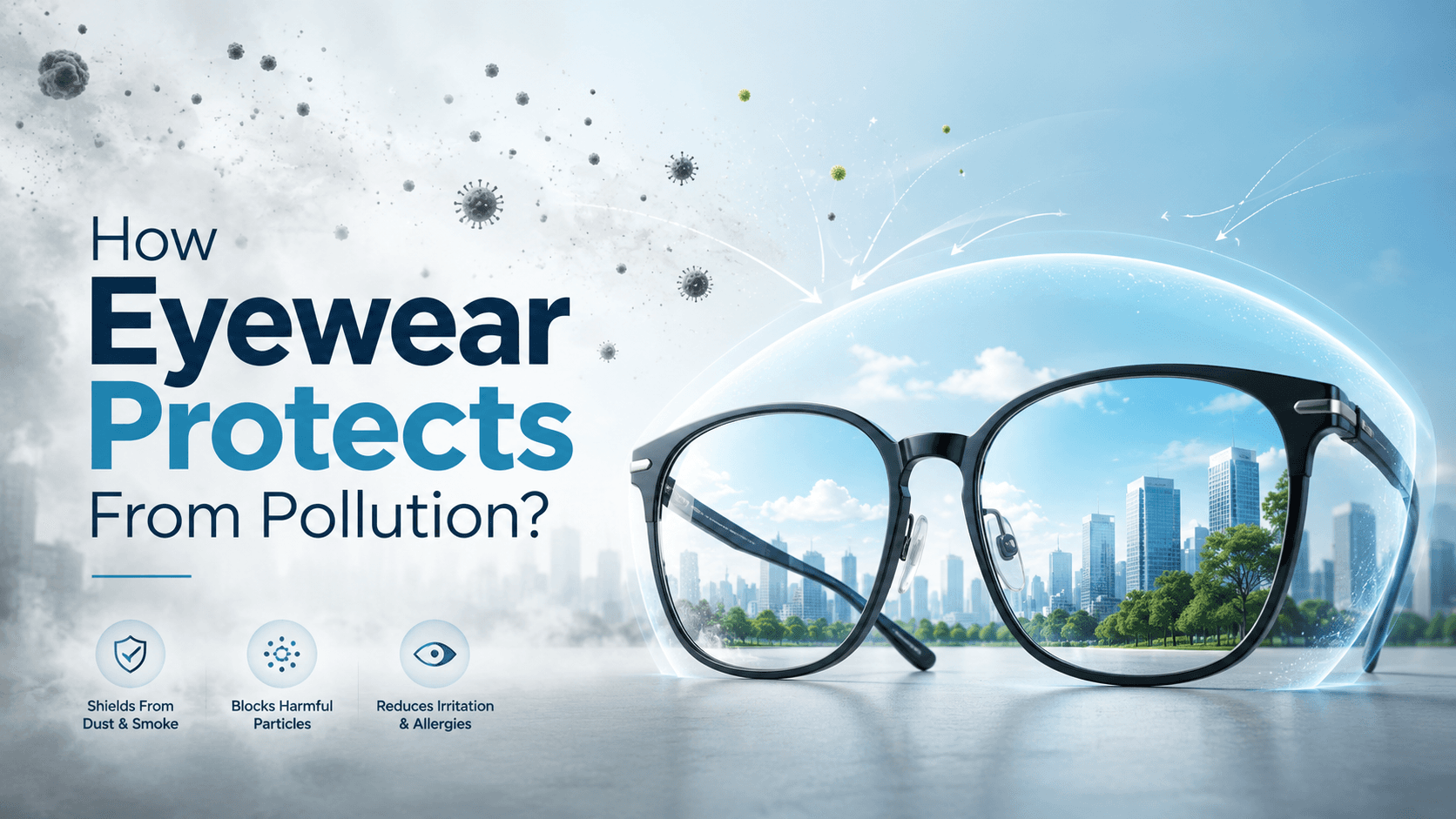
Air pollution can affect more than your lungs. Dust, smoke, traffic emissions, construction particles, ozone, and other airborne irritants can also come into direct contact with the surface of your eyes.
Exposure may contribute to burning, redness, watering, grittiness, sensitivity, and dry-eye symptoms. Studies have also found associations between outdoor air pollution and ocular-surface conditions such as dry eye disease, conjunctivitis, allergies, and blepharitis.
Glasses and sunglasses cannot completely seal your eyes from polluted air. However, well-fitting eyewear can provide a useful physical barrier against some wind, dust, and airborne debris while also improving visual comfort outdoors.
Why Can Air Pollution Irritate Your Eyes?
The front surface of your eye is protected by a thin tear film. It helps keep the eye lubricated, washes away small particles, and supports clear vision.
Environmental factors such as particulate matter, smoke, ozone, low humidity, and wind may disturb this tear film or increase irritation. Fine particles are especially concerning because they can remain suspended in the air and come into contact with exposed tissues.
Common symptoms associated with environmental irritation include:
Burning or stinging
Redness
Watery eyes
A gritty or sandy sensation
Dryness
Itching
Temporary blurred vision
Increased sensitivity to light
Discomfort while wearing contact lenses
These symptoms can have several causes. Pollution may contribute, but allergies, infections, dry-eye disease, contact-lens problems, and other eye conditions can produce similar symptoms.
Can Glasses Protect Your Eyes From Air Pollution?
Glasses can provide partial protection by reducing the amount of wind and larger airborne particles that reach the eyes directly. They may be especially helpful while walking, cycling, commuting, or spending time near traffic and construction.
However, standard eyeglasses leave open spaces around the top, bottom, and sides. Very small particles and gases can still reach the ocular surface.
For everyday urban use, larger lenses and close-fitting frames generally offer more coverage than small, narrow, rimless, or half-rim styles. Wraparound designs can further reduce exposure from the sides.
For heavy dust, flying debris, workplace hazards, chemicals, or construction environments, ordinary glasses are not enough. Use properly rated safety eyewear or goggles suitable for the specific hazard.
Sunglasses or Prescription Glasses: Which Is Better?
The best choice depends on where you are, how much time you spend outdoors, and whether you need vision correction.
Sunglasses
Larger or wraparound sunglasses can:
Reduce exposure to wind and larger airborne particles
Limit sunlight entering from the front and sides
Improve comfort in bright outdoor conditions
Protect against ultraviolet radiation when properly rated
Choose sunglasses labelled UV400, 100% UV protection, or 99–100% UVA and UVB protection. Dark tint alone does not guarantee adequate UV protection.
Prescription eyeglasses
Prescription glasses combine clear vision with some everyday protection from wind and debris. People who wear them throughout the day may benefit from:
Larger lenses for greater coverage
A secure, close-fitting frame
Anti-reflective coating for clearer vision
Easy-clean lens coatings
UV protection where available
Prescription glasses still do not create a sealed barrier, so they should not replace occupational safety eyewear.
Prescription sunglasses
Prescription sunglasses combine vision correction, outdoor comfort, and UV protection in one pair. They can be a practical option for driving, walking, cycling, and other outdoor activities.
Lens Features Worth Considering
Some lens features improve outdoor comfort or make eyewear easier to maintain, although they should not be described as treatments for pollution-related eye conditions.
UV protection
UV protection is important whenever you spend time outdoors. Look for UV400 or lenses that block 99–100% of UVA and UVB radiation.
UV protection is separate from air-pollution protection, but a well-designed pair of sunglasses can help address both sunlight and some physical exposure at the same time.
Polarized lenses
Polarized lenses reduce reflected glare from roads, water, glass, and other shiny surfaces. This can improve comfort while driving or spending time outdoors.
Polarization does not automatically block UV radiation. Confirm that the lenses also include UV400 or equivalent UV protection.
Anti-reflective coating
Anti-reflective coating reduces distracting reflections on the front and back surfaces of the lenses. It may improve clarity around artificial lighting, screens, and nighttime traffic.
Easy-clean coatings
Hydrophobic and oleophobic coatings can make water, fingerprints, oils, and smudges easier to remove. They help keep lenses clearer, but they do not prevent polluted air from reaching the eyes.
Photochromic lenses
Photochromic lenses darken in response to ultraviolet light and become clearer indoors. They may be convenient for people who regularly move between indoor and outdoor environments.
Their performance can vary according to temperature, UV exposure, lens material, and whether they are being worn behind a vehicle windshield.
Does Frame Style Affect Protection?
Yes. The size, shape, and fit of the frame determine how much of the eye area is covered.
For greater everyday coverage, consider:
Large lenses
Wraparound or curved frames
Frames that sit close to the face
Secure temples that prevent slipping
A comfortable bridge fit
Minimal gaps around the sides
Small frames, rimless designs, and frames positioned far from the face provide less peripheral coverage.
The frame should still feel comfortable and should not press against the temples, eyelashes, cheeks, or nose.
How to Clean Glasses After Exposure to Dust
Dusty lenses should be cleaned carefully. Rubbing dry particles across the surface with a shirt, tissue, or paper towel can contribute to fine scratches.
A safer routine is:
Wash and dry your hands.
Rinse loose dust from the lenses with clean lukewarm water, following the lens manufacturer’s instructions.
Apply an approved lens-cleaning solution or a small amount of suitable mild soap.
Gently clean both sides of the lenses and the frame.
Dry them with a clean microfiber cloth.
Store the glasses in a protective case when they are not being worn.
Avoid household glass cleaners, abrasive products, very hot water, and dirty cleaning cloths because they may damage lens coatings.
Additional Ways to Reduce Eye Irritation
Eyewear is only one part of protecting your eyes.
You can also:
Check local air-quality reports before extended outdoor activity
Reduce unnecessary outdoor exposure during severe smoke or pollution events
Avoid rubbing your eyes
Wash your hands before touching your eyes or eyewear
Use indoor air filtration where appropriate
Take regular breaks from screens
Blink frequently when using digital devices
Ask an eye-care professional whether lubricating eye drops are suitable for you
Follow proper contact-lens hygiene
Blue-light-filtering lenses should not be presented as protection against air pollution. Current evidence does not establish that they prevent pollution-related symptoms or reliably relieve digital eye strain.
Final Takeaway
Glasses and sunglasses can reduce direct exposure to wind, dust, and larger airborne particles, but they do not completely protect the eyes from pollution.
For everyday outdoor use, choose comfortable, close-fitting frames with adequate coverage. Sunglasses should provide UV400 or 99–100% UVA and UVB protection. Polarized lenses can reduce glare, while easy-clean coatings may simplify lens maintenance.
In heavily dusty or hazardous environments, use properly rated protective goggles or safety eyewear rather than ordinary fashion glasses.
