
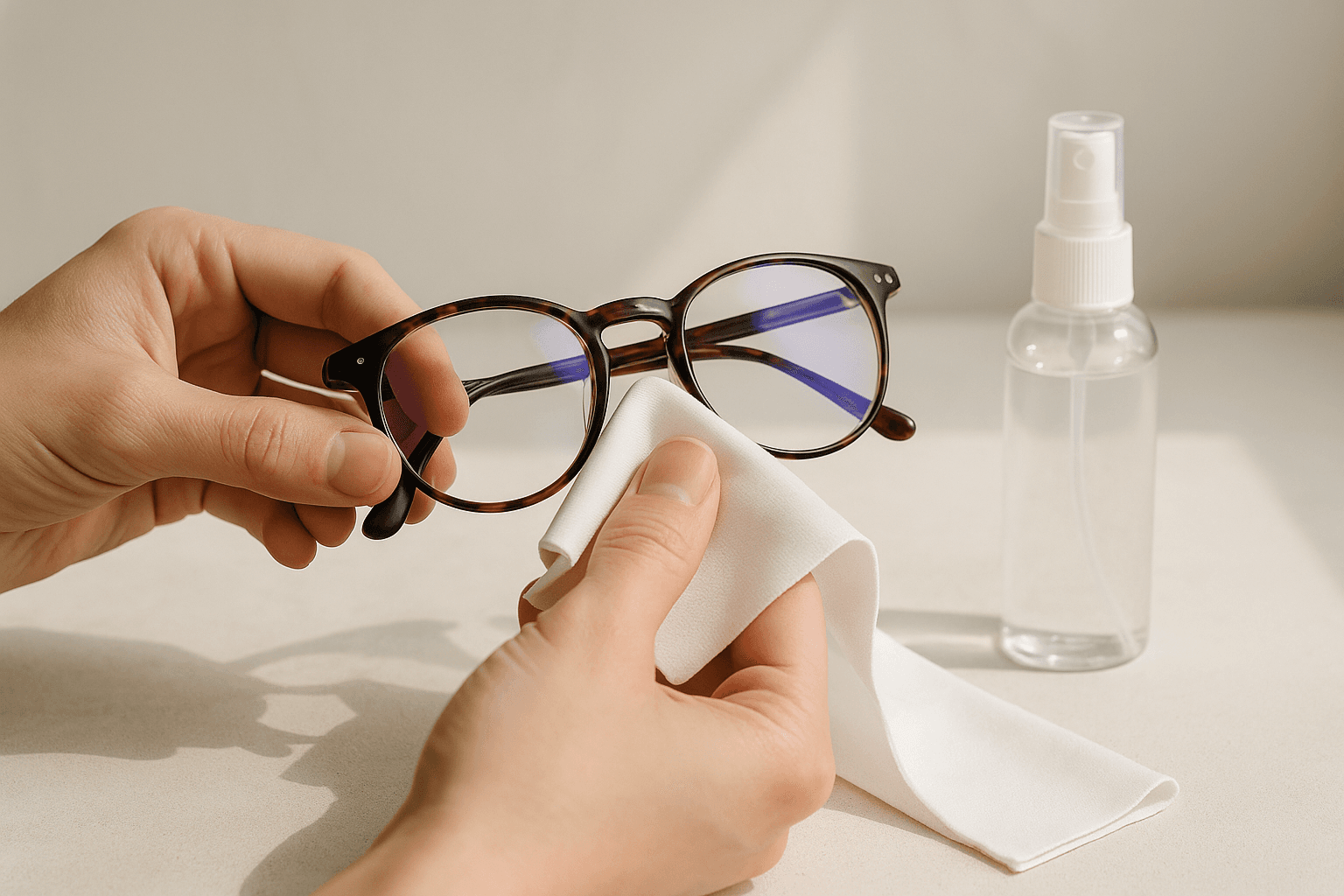
Blue-light glasses feature delicate anti-reflective and blue-light filtering coatings that require gentle, specific cleaning methods. Using the wrong products or techniques can permanently damage these protective layers, reducing their effectiveness and creating unsightly smudges or scratches that can't be repaired.
What Makes Blue-Light Coatings Different?
Blue-light filtering lenses have multiple microscopic coatings applied to block harmful blue light wavelengths from digital screens. These coatings are thinner than a human hair and can be easily damaged by harsh chemicals, abrasive materials, or improper cleaning techniques. Unlike regular glass lenses, blue-light coatings react poorly to alcohol-based cleaners, ammonia, and even some commercial lens cleaners.

The anti-reflective coating that often accompanies blue-light filters is particularly sensitive to heat and chemical exposure. When damaged, these coatings can peel, bubble, or create a cloudy appearance that permanently affects your vision clarity.
Which Cleaning Products Should You Never Use?
Several common household cleaners can irreversibly damage blue-light coatings. Avoid these products completely:
Window cleaners containing ammonia
Alcohol-based solutions (including hand sanitizer)
Household soaps with harsh detergents
Paper towels, tissues, or toilet paper
Your clothing fabric (shirts, scarves, etc.)
Acetone or nail polish remover
Even products marketed as "lens cleaners" may contain alcohol or other chemicals that damage specialized coatings. Always check the ingredient list before using any cleaning product on your blue-light glasses.
What Are the Safe Cleaning Methods?
The safest approach involves using only products specifically designed for coated lenses. Start by rinsing your glasses under lukewarm running water to remove loose debris and dust particles that could scratch the surface during cleaning.
Recommended cleaning supplies:
Microfiber cloth designed for eyewear
pH-neutral lens cleaning solution
Distilled water for rinsing
Soft-bristled toothbrush for frame cleaning

Apply a small drop of pH-neutral lens cleaner to each lens, then gently wipe in circular motions from the center outward. Use light pressure and let the cleaning solution do the work rather than scrubbing aggressively.
Step-by-Step Deep Cleaning Process
For thorough cleaning without coating damage, follow this detailed process weekly:
Step 1: Rinse glasses under lukewarm water for 10-15 seconds to remove surface debris.
Step 2: Apply one small drop of pH-neutral lens cleaner to each lens surface (front and back).
Step 3: Using a clean microfiber cloth, wipe each lens in gentle circular motions, starting from the center and working outward.
Step 4: Clean the nose pads and frame with a soft-bristled toothbrush dampened with the same cleaning solution.
Step 5: Rinse again under lukewarm water to remove all cleaning residue.
Step 6: Gently shake off excess water and pat dry with a fresh microfiber cloth.

Never use hot water, as temperature extremes can cause coating layers to expand and contract at different rates, leading to cracking or peeling.
Daily Maintenance vs Deep Cleaning
Daily cleaning should be minimal and gentle. A dry microfiber cloth is usually sufficient for removing fingerprints and light dust. Save the wet cleaning process for when lenses are genuinely dirty or have stubborn smudges.
Over-cleaning can be just as damaging as using the wrong products. The mechanical action of wiping, even with proper materials, gradually wears down coating layers over time. Clean only when necessary, and always inspect your cloth for trapped debris before use.
How to Spot Coating Damage Early
Recognizing coating damage early can help you adjust your cleaning routine before problems worsen. Look for these warning signs:
Persistent cloudiness that won't clean away
Rainbow-colored patches or streaks
Areas where reflections appear different
Peeling or bubbling coating edges
Increased glare from digital screens

If you notice any of these signs, stop using your current cleaning method immediately and consult with an eyecare professional about replacement options.
Storage Tips That Prevent Cleaning Damage
Proper storage reduces the need for frequent cleaning and protects coatings from environmental damage. Always store blue-light glasses in a hard case when not in use, and keep them away from extreme temperatures.
Place glasses lens-side up on clean surfaces when setting them down temporarily. This prevents the lenses from touching potentially dirty or abrasive surfaces that could require more aggressive cleaning later.
Consider investing in multiple microfiber cloths so you always have a clean one available. Wash microfiber cloths regularly in warm water without fabric softener, which can leave residues that transfer to your lenses.
