
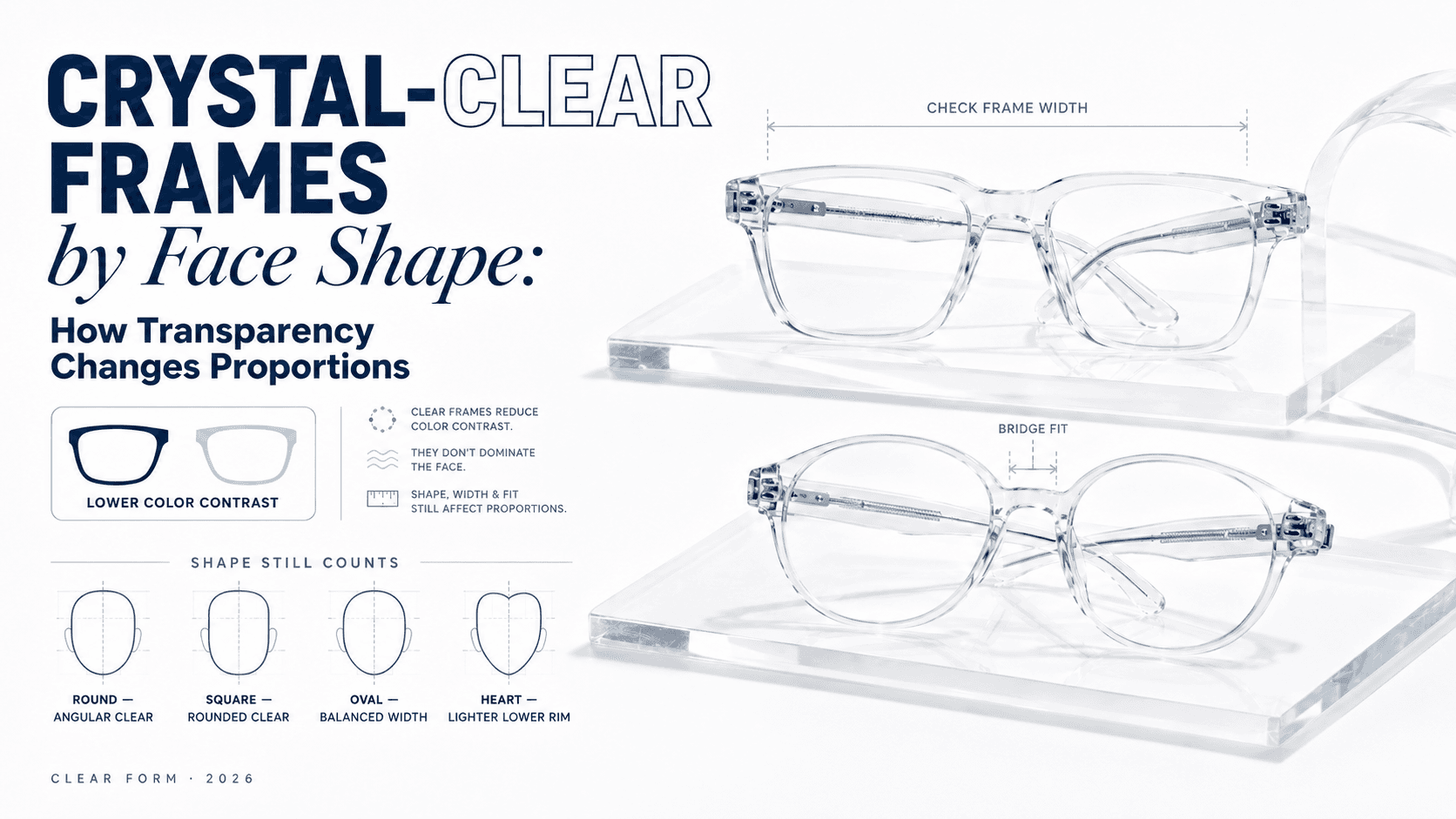
Clear and crystal-tinted frames flatter almost every complexion, but face shape determines whether a transparent frame balances or overwhelms your features. Because the frame outline is the only real visual signal a clear frame sends, getting the geometry right matters more than it does with coloured acetate. Use this guide to find your best match.
Why Transparency Affects Proportions Differently Than Coloured Frames
A solid-coloured frame draws the eye along its entire surface — colour and shape work together to define your look. A transparent frame, by contrast, shows only its silhouette against your skin. That silhouette is amplified rather than softened, which means a frame that is even slightly too wide, too narrow, or too angular will register immediately. The upside: when the shape is right, clear frames look effortlessly refined.
Which Clear Frame Shape Works for Each Face Shape?
Oval Face
Oval faces are the most versatile. Almost any transparent frame works — rectangular, round, geometric, or butterfly. If you want a benchmark, a wide rectangular clear frame preserves the natural balance of an oval face without adding bulk.
Round Face
Round faces benefit from angles. Choose clear square or rectangular frames with a defined brow line. The sharp corners introduce contrast, visually lengthening the face. Avoid perfectly round transparent frames — they echo the face's natural curve and make it appear wider.
Square Face
Strong jawlines and wide foreheads need softening. Clear round or oval frames curve against the face's angularity, creating a pleasing contrast. A thin, barely-there transparent round frame is especially effective because it adds softness without adding visual weight.
Heart Face
Heart-shaped faces are wider at the forehead and narrower at the chin. Clear frames with a low-set bridge and wider lower rims — think light aviator or oval shapes — draw attention downward and balance the proportions. Avoid heavy top-bar styles in clear acetate; they exaggerate forehead width.
Oblong or Long Face
Long faces need width, not height. Oversized clear round or wide rectangular frames add horizontal emphasis. Deep-lens shapes (frames that are taller top-to-bottom) also work well because they visually shorten the face.
Lens Tint Within a Clear Frame: Does It Matter?
Fully clear lenses keep the look minimal and modern. A light blush, grey, or amber tint inside a transparent frame adds a subtle colour accent without darkening the frame itself — a good option if you want definition around the eyes. Photochromic lenses in a clear frame are also practical: the frame stays understated indoors while the lens darkens in sunlight.
Caring for Transparent Frames
Clear acetate shows oils, dust, and micro-scratches more readily than dark frames. Clean the frame itself — not just the lenses — with a damp microfibre cloth weekly. Avoid acetone-based cleaners, which cloud the plastic. Store your glasses in a hard case to prevent yellowing from prolonged UV exposure, and keep them away from direct heat sources like car dashboards, which can warp transparent acetate over time.
