
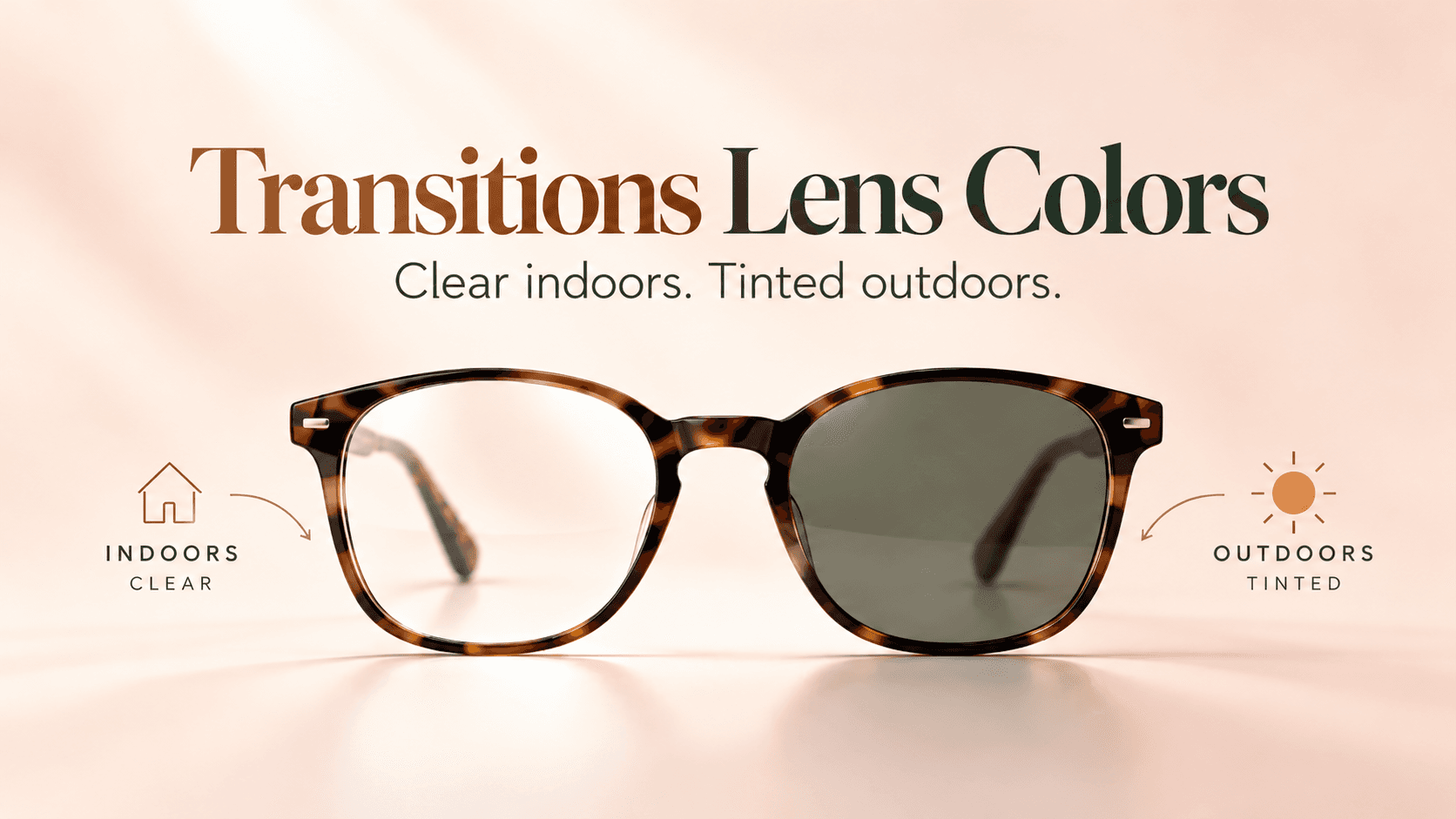
The best Transitions lens color for your frames depends on two things: your frame's base color and how you use your glasses daily. Grey lenses suit cool-toned or dark frames and give true color perception outdoors. Brown and amber tones pair beautifully with warm or tortoise frames and add contrast for driving. Green lenses balance both worlds and work with almost any neutral frame.
What Are Transitions Lenses and Why Does Color Matter?
Transitions lenses (also called photochromic lenses) darken automatically in sunlight and clear up indoors. They are available in several tint colors — most commonly grey, brown, green, and sapphire. The color affects not just aesthetics but also how you perceive contrast, depth, and true color outdoors. Choosing the wrong tint for your frame can make even an expensive pair look mismatched or feel visually uncomfortable.
Grey Transitions Lenses: Best for Cool and Dark Frames
Grey is the most popular Transitions color in India and for good reason. It reduces brightness without distorting color, so what you see outdoors looks natural. Grey pairs best with black, gunmetal, navy, and dark tortoise frames. If you work under harsh sunlight — on a commute, at a construction site, or during outdoor sports — grey is the most reliable choice.
Brown and Amber Lenses: Best for Warm-Toned Frames
Brown and amber Transitions lenses enhance contrast and depth perception, making them popular with drivers and golfers. They work especially well with honey tortoise, gold, rose gold, and warm brown frames. These tints make edges appear sharper and terrain easier to read, which is why eye care professionals often recommend them for people who spend time on uneven ground or behind the wheel.
Green Lenses: The Versatile Middle Ground
Green Transitions lenses sit between grey and brown on the spectrum. They reduce glare without sacrificing true color balance, making them a strong all-rounder. Green pairs naturally with olive, dark brown, black, and even translucent frames. If you want a single pair that handles office lighting, outdoor errands, and weekend drives without looking out of place, green is a smart default.
Sapphire and Style-Focused Tints: For the Fashion-Forward
Transitions now offers style-focused colors like sapphire, amethyst, and emerald under their Transitions Style Colors and Vantage ranges. These do not darken as deeply as grey or brown but add a fashion dimension. Sapphire lenses complement silver or clear frames beautifully and appeal to younger consumers who want their glasses to make a statement even indoors.
How Your Skin Tone Influences the Choice
Your frame color is often chosen to complement your skin tone, and your lens color should follow the same logic. Cool undertones (bluish veins, pink or rosy complexion) pair well with grey or sapphire lenses. Warm undertones (greenish veins, golden or olive complexion) look best with brown or amber. If you are unsure, grey and green are both broadly flattering across Indian skin tones.
Quick Comparison: Which Lens Color to Choose
Grey: True color outdoors, suits dark and cool-toned frames, ideal for general use.
Brown: Enhanced contrast, suits warm and tortoise frames, great for driving.
Green: Balanced contrast and color, suits most neutral frames, best all-rounder.
Sapphire/Style Colors: Fashion-forward, suits clear or silver frames, lighter outdoor darkening.
When in doubt, bring your frames to an optician and hold sample tints against them in natural light before ordering. The few extra minutes can save you weeks of second-guessing.
