
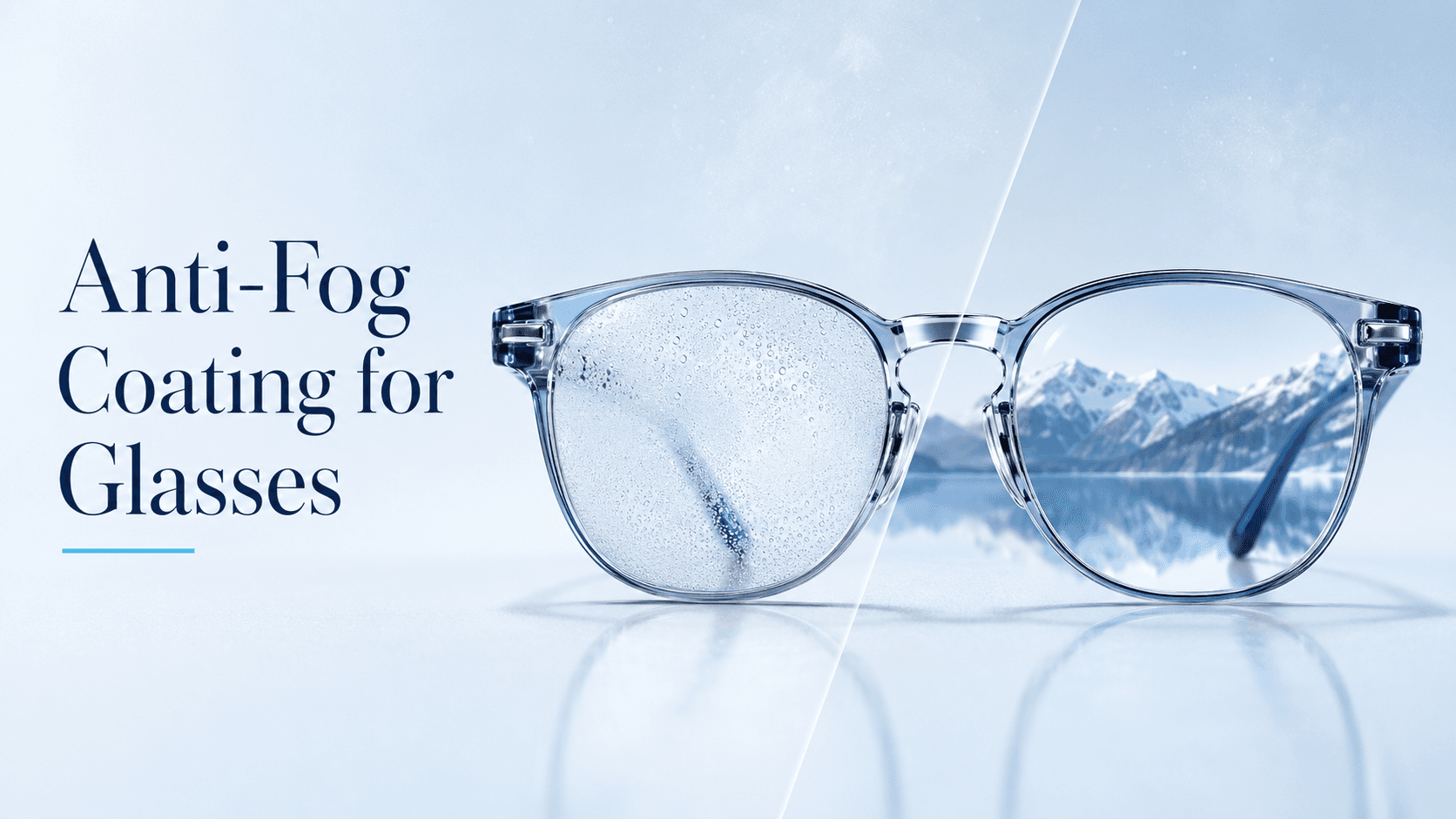
Fogged lenses are more than a small inconvenience. They can interrupt your vision while cooking, exercising, wearing a face covering, working around steam or moving between spaces with different temperatures.
Anti-fog treatments help by changing how condensed moisture behaves on the lens. Instead of forming thousands of tiny droplets that scatter light and create a cloudy appearance, the moisture spreads into a thin, more transparent layer.
What Causes Glasses to Fog Up?
Glasses fog when warm, moisture-filled air reaches a cooler lens surface. As the air cools, water vapour condenses into microscopic droplets. These droplets scatter light, making the lens appear cloudy or white.
This commonly happens when you:
Step outside from an air-conditioned building into warm, humid air
Enter a heated building from cold outdoor weather
Open an oven, dishwasher or steaming pan
Exercise or play sports
Wear a face mask or face covering
Use a helmet, goggles or protective eyewear
Work in kitchens, healthcare facilities or other temperature-changing environments
Fogging can occur anywhere in the world. It is especially common in humid climates, cold winters, rainy seasons and workplaces where steam or rapid temperature changes are unavoidable.
How Does Anti-Fog Coating Work?
Most conventional anti-fog treatments are hydrophilic, meaning they attract water and encourage it to spread evenly across the lens.
This changes the lens’s wettability and reduces the contact angle of condensed water. Instead of collecting into visible droplets, the moisture forms a thin film that allows more light to pass through with less scattering.
Temporary anti-fog sprays and wipes work in a similar way by leaving a thin hydrophilic film on the lens. Depending on the product, application and cleaning routine, the effect may last from several hours to a few days. For example, some commercial anti-fog systems claim protection for up to 72 hours, but actual performance can vary.
What about hydrophobic coatings?
Hydrophobic coatings repel liquid water and help droplets roll away. They are valuable for rain, fingerprints, oil and easier cleaning, but a standard hydrophobic coating is not automatically an anti-fog coating.
Dedicated consumer anti-fog treatments are generally hydrophilic. More advanced coatings can combine hydrophilic and hydrophobic properties, but these are specially engineered systems—not the same as an ordinary water-repellent lens coating.
Who Can Benefit from Anti-Fog Lenses?
Anti-fog protection may be particularly useful if you:
Regularly wear a face mask or covering
Live in a humid, rainy or cold climate
Exercise while wearing prescription glasses
Work around steam, heat or frequent temperature changes
Wear prescription safety glasses or protective goggles
Use a motorcycle, cycling, ski or sports helmet
Frequently move between refrigerated, air-conditioned and heated areas
Experience recurring lens fog while commuting or travelling
For workplace hazards, an anti-fog coating does not replace properly certified safety eyewear. Workers should use protective glasses or goggles appropriate for the specific impact, splash, chemical or infection risk. The CDC notes that well-fitted, indirectly vented goggles with anti-fog protection can be helpful in certain healthcare environments.
Anti-Fog vs Anti-Reflective Coating
Anti-fog and anti-reflective coatings solve different problems.
An anti-reflective coating does not automatically stop fogging. Similarly, a water-repellent outer layer should not be marketed as a dedicated anti-fog treatment unless the lens manufacturer specifically supports that claim.
If you need several benefits, ask your optician whether the coatings are compatible and available as part of the same lens package.
Factory Treatment vs Anti-Fog Sprays and Wipes
Factory-applied treatment
A factory-applied treatment is built into or bonded to the lens surface. It can be convenient for people who experience fogging regularly because it does not require application before every use.
However, avoid promising that every factory anti-fog coating will last for the entire life of the lens. Durability depends on the coating technology, frequency of use, cleaning method and normal surface wear.
Sprays and wipes
Anti-fog sprays and wipes are useful for existing glasses and occasional fogging. They are generally less expensive, but they must be reapplied according to the manufacturer’s instructions.
Before using one, confirm that it is compatible with:
Anti-reflective coatings
Photochromic lenses
Polarised lenses
Polycarbonate lenses
Safety glasses or goggles
Helmet visors
Avoid using household detergents, shaving cream or other unapproved DIY products. They may leave residue, affect optical clarity or damage specialised lens coatings.
How to Care for Anti-Fog-Coated Glasses
Follow the instructions supplied by the lens or anti-fog product manufacturer. General care recommendations include:
Use a clean microfibre cloth
Rinse away loose dust with lukewarm water when possible
Avoid very hot water
Do not use paper towels, clothing or abrasive tissues
Use only a cleaner approved for coated lenses
Avoid acetone, harsh solvents and household glass cleaners
Store glasses in a protective case
Reapply temporary anti-fog products only as directed
Do not assume every alcohol-based cleaner is unsafe. Compatibility depends on the specific coating and cleaner, so manufacturer guidance should take priority.
Is Anti-Fog Coating Worth It?
Anti-fog protection can be worthwhile when lens fogging happens frequently or interferes with work, exercise, travel or everyday tasks. A factory-applied option may suit regular users, while a compatible spray or wipe may be enough for occasional situations.
Before paying for an upgrade, ask:
Is the treatment permanent or temporary?
How long is it expected to remain effective?
Is it compatible with anti-reflective and photochromic coatings?
Are special cleaning products required?
Is the coating covered by a warranty?
Anti-fog protection cannot prevent every trace of condensation in all conditions. Its purpose is to reduce fogging and help the lenses clear more effectively.
Final Thoughts
Anti-fog coating is a practical lens feature for people who regularly experience condensation caused by humidity, cold weather, masks, exercise, steam or temperature changes.
The best option depends on how often your glasses fog and which other coatings your lenses already have. When choosing new prescription glasses, compare the available lens treatments carefully and select features that match your actual routine.
Explore prescription eyeglasses at Rimloo and confirm which lens coating options are currently available before ordering.
