
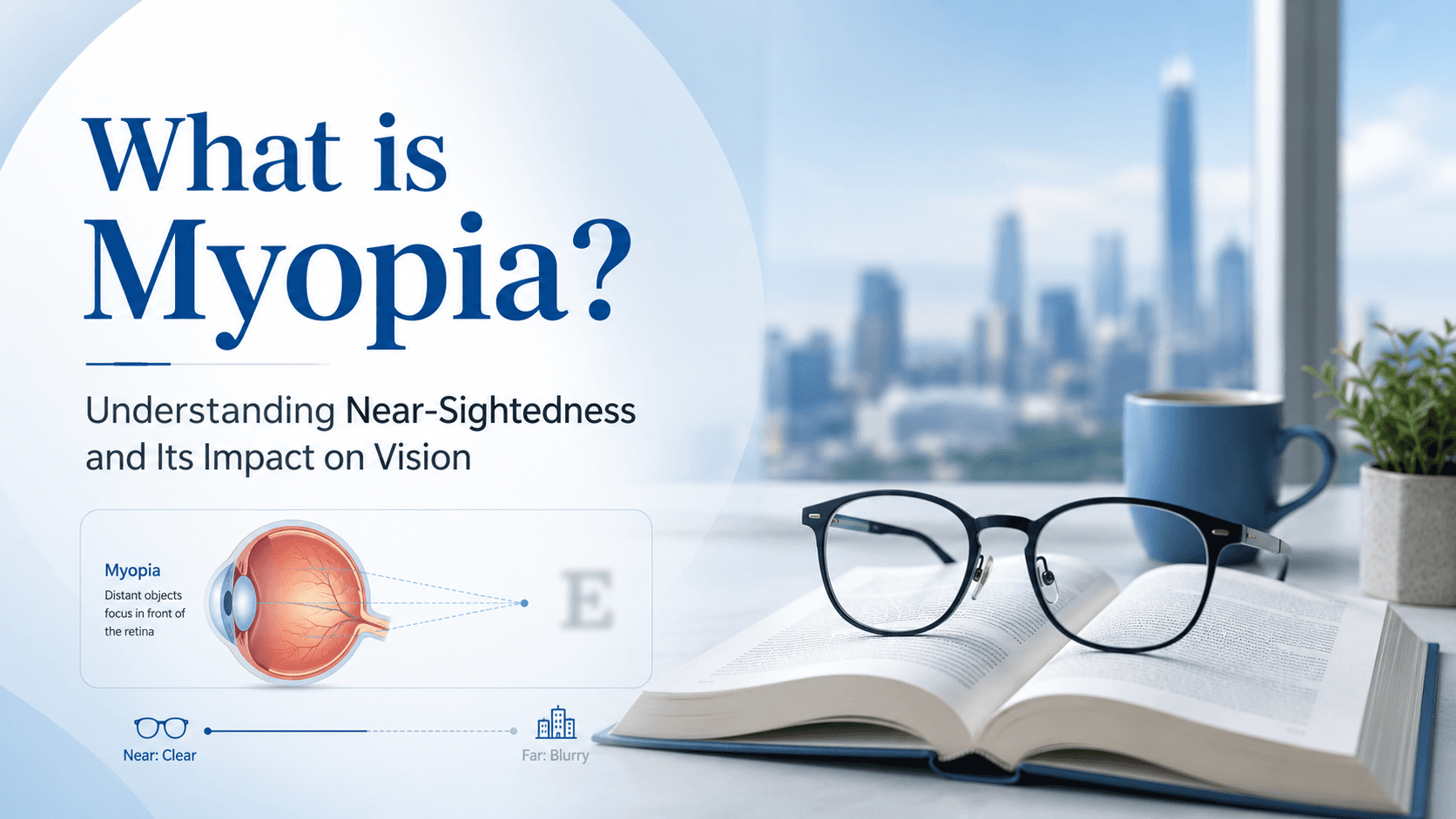
Myopia, commonly known as near-sightedness, is a refractive error where distant objects appear blurry while close objects remain clear. This condition occurs when the eyeball is too long or the cornea is too curved, causing light to focus in front of the retina instead of directly on it. With myopia rates rising rapidly in India, particularly among urban populations and students, understanding this condition is crucial for maintaining healthy vision.
How Does Myopia Develop in the Eye?
The human eye works like a camera, with the cornea and lens focusing light onto the retina at the back of the eye. In myopic eyes, the eyeball's elongated shape or excessive corneal curvature causes light rays to converge before reaching the retina. This creates a blurry image for distant objects while near vision remains unaffected.
Myopia typically develops during childhood and adolescence when the eye is still growing. The condition often progresses gradually, requiring stronger prescriptions over time until eye growth stabilizes, usually in the early twenties.
What Are the Common Signs and Symptoms?
Recognizing myopia early is essential for proper treatment. Common symptoms include:
Difficulty seeing distant objects clearly, such as whiteboards in classrooms or road signs while driving
Squinting to see far-away objects
Frequent headaches from eye strain
Eye fatigue after activities requiring distance vision
Sitting closer to the television or holding books very close to the face
Children may not always communicate vision problems clearly, so parents should watch for signs like poor academic performance, lack of interest in sports, or frequent eye rubbing.
What Causes Myopia to Develop?
Multiple factors contribute to myopia development, with both genetic and environmental influences playing significant roles. Genetics account for a substantial portion of risk—children with myopic parents are more likely to develop the condition themselves.
Environmental factors have become increasingly important in India's urban settings. Prolonged near work activities like reading, studying, or using digital devices can contribute to myopia progression. Limited outdoor time also correlates with higher myopia rates, as natural light exposure may help regulate eye growth.
The rapid rise in myopia among Indian students, particularly in metropolitan areas, reflects changing lifestyle patterns with increased academic demands and reduced outdoor activities.
How is Myopia Diagnosed and Measured?
Eye care professionals diagnose myopia through comprehensive eye examinations. The process includes:
Visual acuity tests measure how clearly you can see letters or symbols at various distances. Refraction tests determine the exact prescription needed to correct vision. Additional tests may examine eye health and rule out other conditions.
Myopia severity is measured in diopters, indicated by a minus sign in prescriptions. Mild myopia ranges from -0.25 to -3.00 diopters, moderate myopia from -3.25 to -6.00 diopters, and high myopia exceeds -6.00 diopters. Higher prescriptions indicate more severe near-sightedness.
What Treatment Options Are Available?
Several effective treatments can correct myopia and slow its progression:
Corrective lenses remain the most common solution. Prescription eyeglasses provide clear, comfortable vision for all activities. Contact lenses offer wider peripheral vision and freedom during sports or outdoor activities.
Specialized treatments for myopia control include orthokeratology (overnight reshaping contact lenses), multifocal contact lenses, and atropine eye drops. These approaches aim to slow myopia progression in children and young adults.
Surgical options like LASIK or PRK may be suitable for adults with stable prescriptions, though they don't prevent myopia-related eye health risks associated with high prescriptions.
Can Myopia Progression Be Prevented?
While genetic factors cannot be changed, lifestyle modifications may help slow myopia progression. Encourage children to spend at least two hours outdoors daily, as natural light exposure may help regulate eye growth.
Practice the 20-20-20 rule during near work: every 20 minutes, look at something 20 feet away for at least 20 seconds. Maintain proper reading distance and ensure adequate lighting for close work activities.
Regular eye examinations allow early detection and intervention. For children showing signs of myopia progression, specialized myopia control treatments can significantly slow the condition's advancement.
When Should You Seek Professional Care?
Schedule an eye examination if you or your child experience any myopia symptoms, particularly difficulty seeing distant objects clearly. Children should have regular eye exams even without obvious symptoms, as vision problems can affect academic performance and development.
Adults with existing myopia should maintain regular check-ups to monitor prescription changes and overall eye health. High myopia increases risks for retinal detachment, glaucoma, and cataracts, making ongoing professional care essential.
