
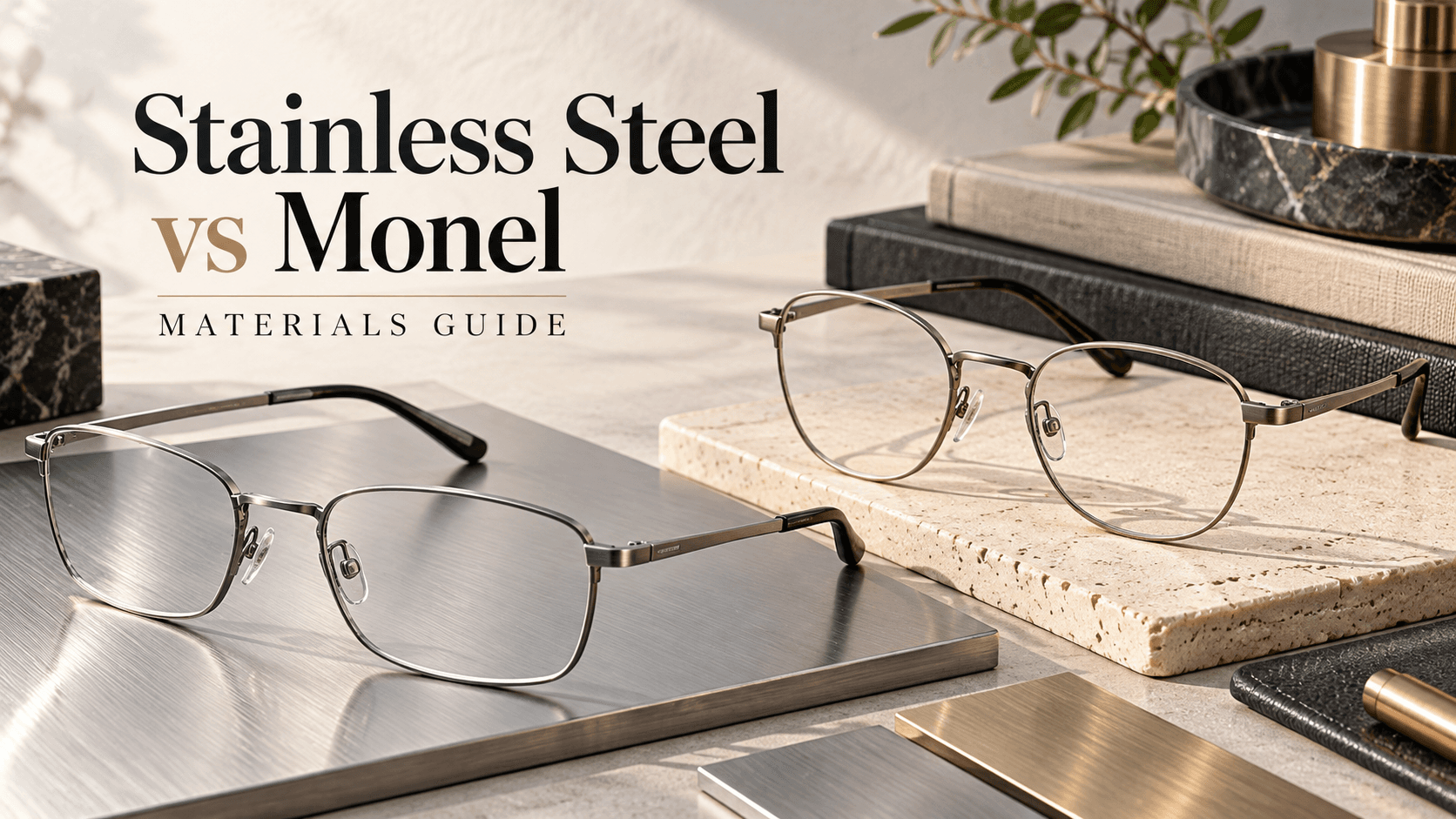
Stainless steel frames are more rigid and corrosion-resistant, making them ideal for active, low-maintenance wear, while monel frames offer greater flexibility and are easier to adjust, suiting those who need a precise, comfortable fit. Both are popular metal choices for prescription eyeglasses in India, but they behave quite differently on your face and over time.
What Is Stainless Steel and Why Is It Used in Eyewear?
Stainless steel is an alloy of iron, chromium and, often, nickel. In eyewear, it typically contains at least 10–11% chromium, which forms a passive oxide layer that resists rust and tarnish. The result is a frame that holds its shape firmly, looks sleek and requires very little upkeep. Stainless steel frames are also hypoallergenic in higher grades, which matters for wearers with sensitive skin.
Because stainless steel is relatively hard, it is less prone to bending out of shape during daily use. The trade-off is that it can feel slightly heavier than alternatives like titanium or TR90, and repeated forceful bending may cause it to crack rather than spring back.
What Is Monel and How Is It Different?
Monel is a nickel-copper alloy, typically containing 60–70% nickel along with copper and small amounts of iron and manganese. It has been used in eyewear for decades because it is highly malleable — opticians can adjust monel frames repeatedly without fear of snapping the metal. This makes monel a favourite for rimless and semi-rimless styles where precise temple and nose-pad adjustment is critical.
However, monel contains significant nickel content, which is a known allergen. Wearers with nickel sensitivity may experience redness or irritation around the nose pads and temples. Most monel frames receive a protective coating or plating to reduce direct skin contact, but this layer can wear off over time, especially with heavy perspiration — a real consideration in the Indian climate.
Stainless Steel vs Monel: Head-to-Head Comparison
Durability and Strength
Stainless steel wins on structural rigidity. It resists everyday knocks and holds its shape without frequent trips to the optician. Monel, being softer, may need adjustment more often but is less likely to snap under gradual bending stress.
Corrosion and Sweat Resistance
Stainless steel performs better in humid, coastal or high-sweat environments. Monel can pit or discolour over months of exposure to perspiration unless the coating is regularly maintained. If you live in cities like Mumbai or Chennai, stainless steel is generally the safer long-term bet.
Adjustability and Comfort Fit
Monel is the clear winner here. Its malleability means your optician can fine-tune the fit — widening the bridge, angling the temples — with ease. Stainless steel frames can be adjusted but require more effort and carry a small risk of stress fractures if overworked.
Skin Sensitivity
Higher-grade stainless steel (such as 316L surgical steel) is considered safe for most skin types. Monel frames carry a higher nickel load and are a better choice only when coated; uncoated or worn-coating monel can trigger allergic reactions.
Price and Value
Both materials sit in a mid-range price bracket in India. Stainless steel frames tend to be marginally less expensive, while monel frames may cost slightly more due to their superior adjustability and the craftsmanship involved in finishing them. Either way, both outlast plastic alternatives with basic care.
Which Frame Material Should You Choose?
Pick stainless steel if you want a low-maintenance, corrosion-resistant frame that holds its shape through daily activity and suits a warm, humid Indian climate. Choose monel if precise fit adjustability is a priority and you are not sensitive to nickel — or if your optician recommends it for a complex prescription that needs frequent minor tweaks.
