
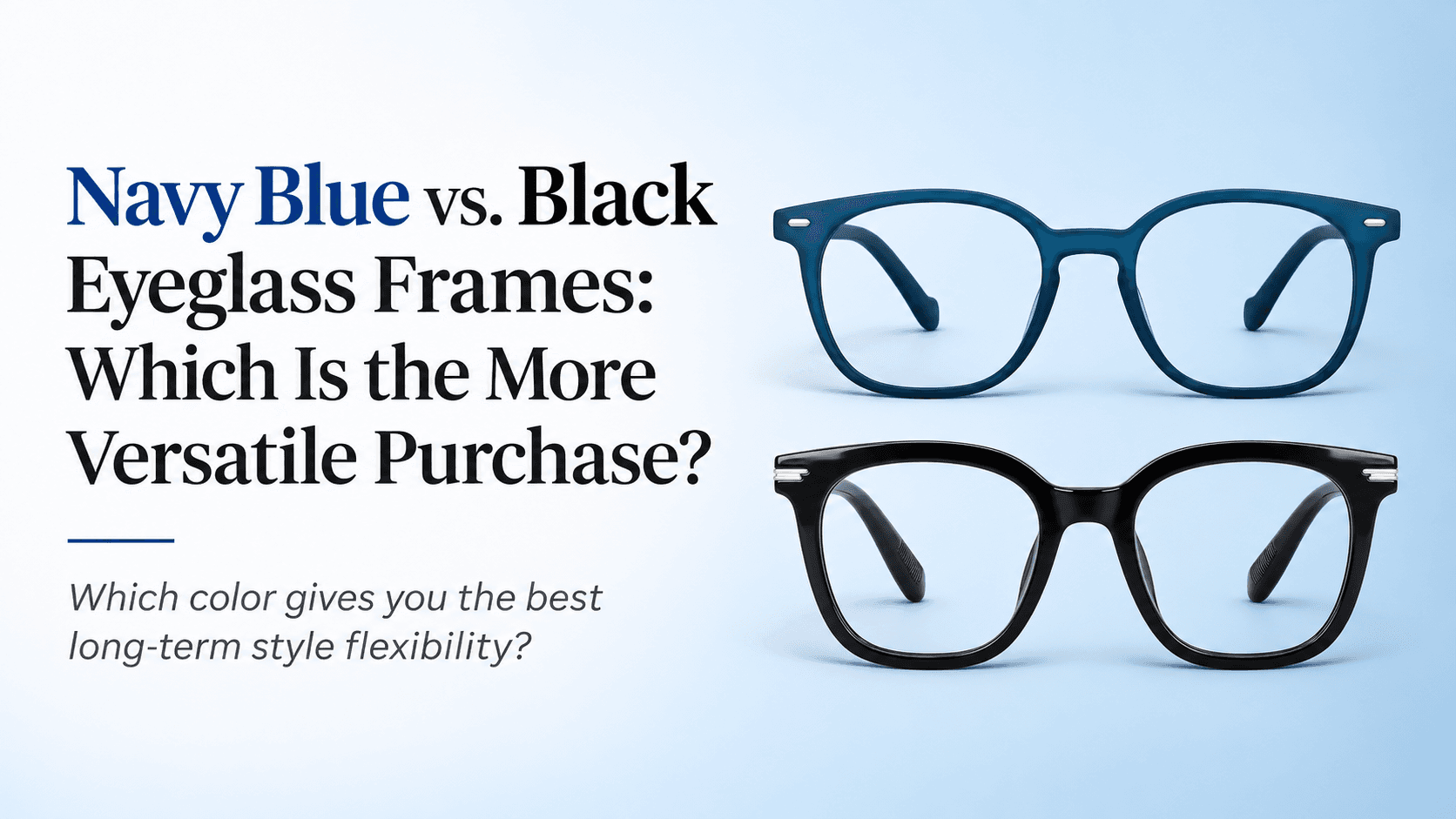
Navy blue and black eyeglass frames are both considered neutrals in the eyewear world, but they behave very differently on your face and in your wardrobe. Black is the definitive all-rounder — sharp, high-contrast, and universally accepted. Navy blue is softer, slightly warmer, and increasingly favoured by style-conscious wearers who want a distinctive look without going bold. If you can only buy one pair, your skin tone, daily outfits, and personal style will decide the winner.
How Do Navy Blue and Black Frames Differ in Everyday Wear?
At first glance, navy and black can look similar in low light. In daylight, however, the difference is obvious. Black frames create a crisp, high-contrast line against almost every skin tone. They read as authoritative and minimal — think architect, lawyer, or designer. Navy blue frames have a blue undertone that adds depth without aggression. They tend to look less severe on fairer complexions and bring a subtle pop of colour to neutral outfits.
In practical terms, black frames are easier to match because most Indian wardrobes already contain a lot of black, white, grey, and earth tones — all of which pair effortlessly with black frames. Navy frames work beautifully with the same palette but add an extra dimension when worn with indigo denim, olive kurtas, or white ethnic wear, which are staples for many Indian consumers.
Which Frame Colour Suits Your Skin Tone Better?
Skin tone is one of the most reliable guides when choosing frame colour.
Fair to wheatish skin: Both colours work, but navy blue creates a softer contrast that tends to feel more flattering. Black can sometimes look stark against very fair skin.
Medium to olive skin: This is the sweet spot for black frames — the contrast is striking without being harsh. Navy also works well and adds a cool, contemporary edge.
Deep or dark skin tones: Black frames blend into the skin rather than contrasting with it, so they can appear understated. Navy blue stands out more clearly and often looks more dynamic.
These are general guidelines, not rules. The shape of the frame, the finish (matte vs. gloss), and the colour of your hair and eyes all interact with the frame colour. When in doubt, try both virtually before buying.
Navy Blue vs. Black for Different Face Shapes
Frame colour and frame shape work together. A good shape on the wrong colour can still fall flat, and vice versa.
Round faces benefit from angular frames in either colour — but black angular frames create a sharper, more defined look, which is often the goal for rounder features.
Square faces suit softer, rounder frames. Navy blue in a round or oval silhouette can appear less severe than the same shape in black, making it a great option here.
Oval faces can carry almost any frame shape and colour. This is the face shape where navy blue frames shine, since you have the freedom to experiment.
Heart-shaped faces look great in lighter, bottom-heavy frames. Navy blue in a rimless or semi-rimless style can be more flattering than a solid black frame that draws extra attention upward.
Professional Settings: Which Colour Is More Office-Appropriate?
In traditional corporate or formal Indian work environments — think banking, law, or government — black frames remain the safer, more conventional choice. They signal seriousness and are unlikely to attract comment either way. Navy blue has gained significant ground in creative and tech workplaces, where individuality is welcomed. For client-facing roles that value approachability over authority, navy can actually work in your favour — it is professional without being intimidating.
If your work wardrobe leans heavily on navy suits, navy shirts, or navy sarees, be careful about frame-outfit clashes. A navy frame worn with a navy outfit can disappear. In that case, black frames give you the contrast you need.
Casual and Social Style: Where Navy Blue Has an Edge
Outside the office, navy blue frames can feel fresher and more considered than black. Because black frames are so common, a well-chosen navy frame immediately signals that you have put thought into your look. They pair particularly well with casual Indian fashion — white linen kurtas, indigo block-print shirts, earthy palettes — and with smart casuals like chinos and polo shirts.
Black frames, on the other hand, are the go-to for anyone who prefers a minimal, low-effort aesthetic. They match everything without requiring you to think about it, which is itself a valid style choice.
Durability, Maintenance, and Finish
From a maintenance perspective, both colours are forgiving. Scratches and minor scuffs are less visible on matte finishes than gloss finishes, regardless of colour. Dust shows slightly more on glossy black than on matte navy. Neither colour fades dramatically with normal wear, though prolonged UV exposure and sweat can affect any acetate frame over time. Regular cleaning and proper storage in a hard case will keep both looking sharp for years.
So Which Should You Buy?
Buy black if you want maximum versatility with zero effort, work in a formal environment, or prefer a classic, timeless aesthetic. Buy navy blue if you want to look more distinctive, have a medium-to-deep skin tone, wear a lot of neutral or earth-tone outfits, or simply want your eyewear to feel like a considered style choice rather than a default. If your budget allows, owning one pair of each gives you complete coverage — black for formal settings, navy for everything else.
