
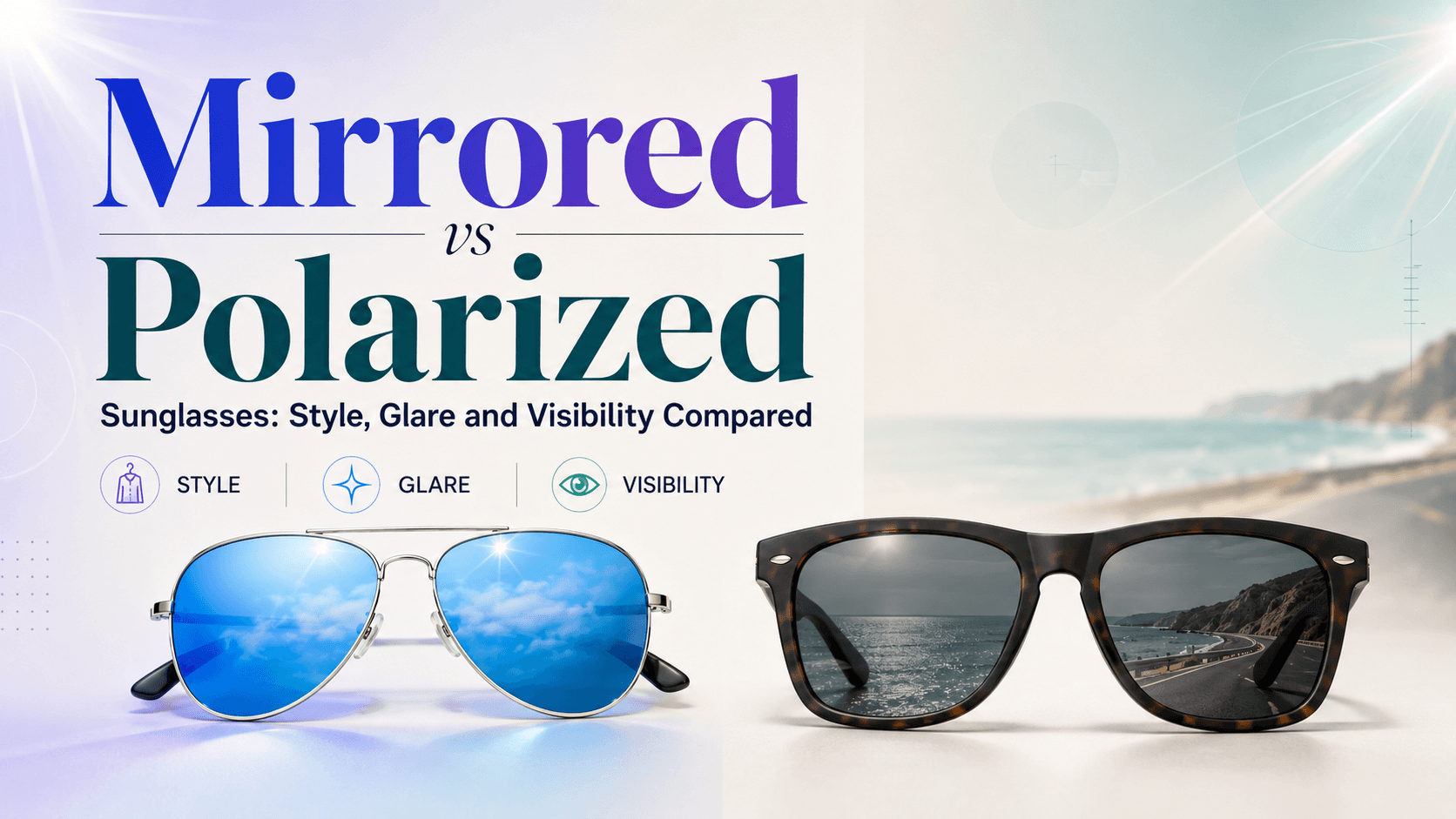
Mirrored sunglasses reflect light off a metallic coating on the lens surface, while polarized sunglasses use a chemical filter embedded in the lens to block horizontally scattered glare. Both reduce eye strain outdoors, but polarized lenses offer superior functional protection, whereas mirrored lenses lead on style versatility. The right choice depends on how and where you wear your sunglasses.
How Do Mirrored Lenses Work?
Mirrored lenses have a thin, reflective metallic coating applied to the outer surface of the lens. This coating bounces light away before it reaches your eye, reducing overall brightness. Because the mirror effect is purely on the surface, the base lens underneath can be any tint — grey, brown, or even clear. The result is a bold, fashion-forward look that also provides moderate glare reduction.
Mirrored lenses are a popular choice for casual outdoor use, beach outings, and anyone who wants their sunglasses to make a style statement. They are widely available across frame shapes and price points, making them accessible for everyday wear.
How Do Polarized Lenses Work?
Polarized lenses contain a special chemical filter that is aligned vertically inside the lens material. Light reflected off flat surfaces — road tarmac, water, snow, or glass — travels horizontally and is almost entirely blocked by this vertical filter. The effect is a dramatic reduction in glare without significantly darkening the overall scene.
For driving, water sports, cricket, or any activity where reflected glare is a safety concern, polarized lenses are the clinically preferred option. They also reduce eye fatigue on long drives or sunny afternoons far more effectively than mirrored lenses alone.
Mirrored vs Polarized: Key Differences at a Glance
Glare reduction: Polarized lenses block reflected glare at the source; mirrored lenses reflect incoming light but do not eliminate reflected glare as precisely.
Clarity: Polarized lenses deliver sharper, truer contrast — colours appear more natural and depth perception improves.
Style range: Mirrored lenses come in vivid colours (gold, blue, red) that are hard to achieve with standard polarized coatings.
Screen visibility: Polarized lenses can make LCD screens (dashboards, ATMs, phones) harder to read at certain angles — mirrored lenses do not have this drawback.
Cost: Polarized lenses generally cost more due to the manufacturing process involved.
Durability: Mirrored coatings can scratch or peel if not cared for properly; always use a microfibre cloth and a hard case.
Can You Get Both Together?
Yes — and this is often the smartest choice. Many sunglasses combine a polarized base lens with a mirrored outer coating. You get the optical performance of polarization plus the reflective aesthetic of a mirror finish. Look for products labelled polarized mirrored when browsing.
Which One Should You Choose?
If you drive frequently, spend time near water, or play outdoor sports, choose polarized lenses — your eyes will thank you. If you want a trendy everyday pair for casual outings and style is your primary driver, mirrored lenses are a great pick. Budget-conscious buyers who want some glare relief without paying a premium will also find mirrored options more affordable. When in doubt, opt for the polarized-mirrored combination for the best of both worlds.
Browse Rimloo's full range of sunglasses for men and women to find polarized, mirrored, and combination styles across hundreds of frame shapes and budgets.
