
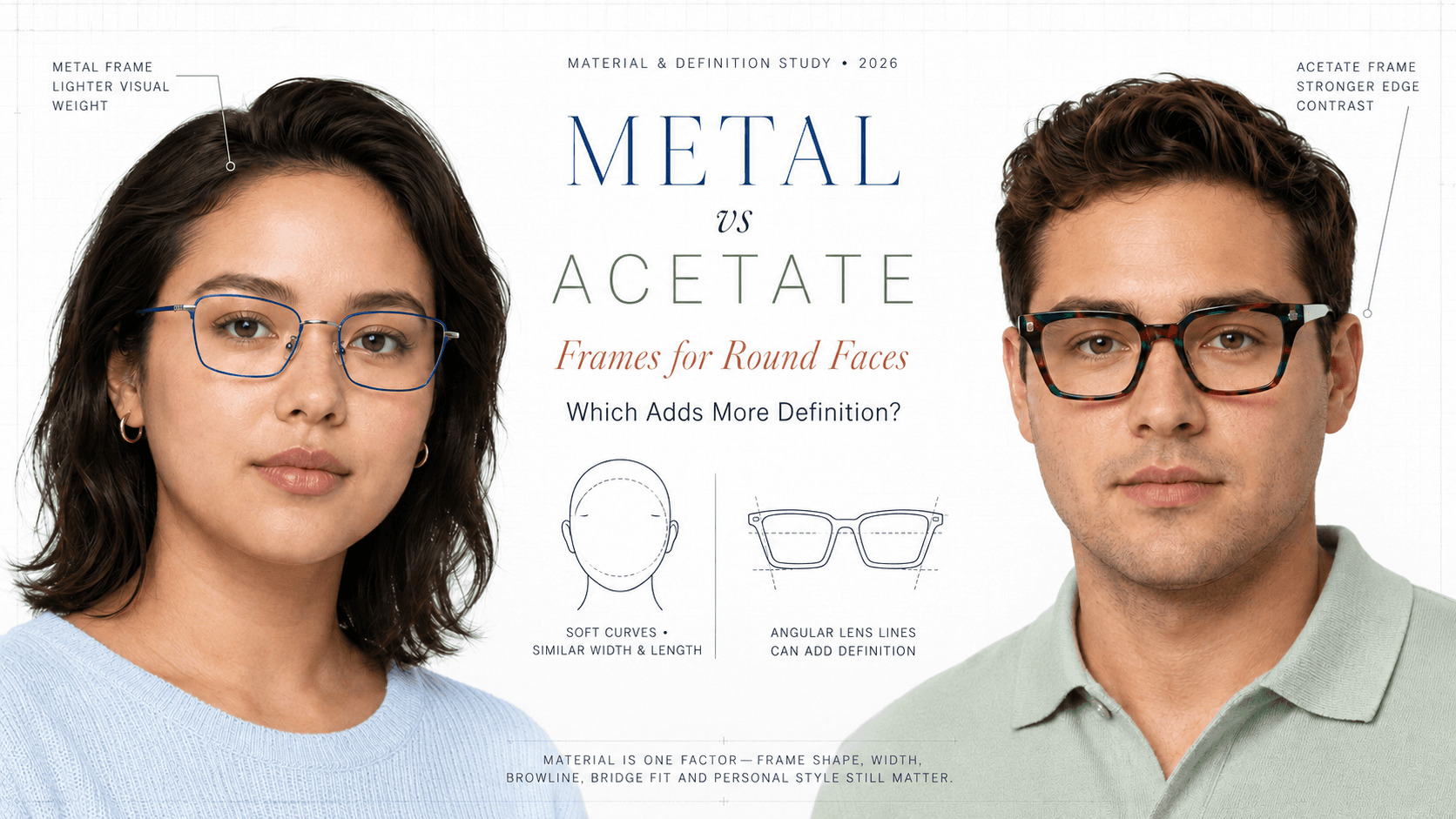
If you have a round face, the right frame material can make a real difference to how defined your features look. Metal frames generally win on adding sharpness and structure thanks to their slim, angular profiles, while acetate frames bring bold colour and thickness that can visually elongate a round face when chosen carefully. Neither is universally better — it depends on your style goal and frame shape.
Why Frame Material Matters for Round Faces
Round faces are characterised by soft curves, similar width and length measurements, and a gentle jawline. The styling goal is typically to introduce contrast — angles, width at the temples, and vertical lift. Frame material directly influences how heavy, sharp, or structured a pair of eyeglasses looks on your face, which is why the metal vs acetate choice is worth thinking through before you buy.
Metal Frames: Sharp Lines, Lightweight Definition
Metal frames — including stainless steel, titanium, and mixed-metal alloys — are prized for their thin rims and precise geometry. For a round face, this translates to crisp, clean lines that cut through soft facial curves and create the illusion of more chiselled features.
Slim temples draw the eye horizontally, adding perceived width to the face.
Minimalist profiles let a strong frame shape (rectangular, browline, geometric) do the heavy lifting.
Lightweight feel means comfortable all-day wear, especially with prescription lenses.
Metal is ideal if you prefer subtle, office-appropriate eyewear with quiet definition.
Acetate Frames: Bold Colour, Structured Volume
Acetate is a plant-derived plastic that allows for richer colours, patterns, and thicker rims. A well-chosen acetate frame can add significant definition to a round face — but the frame shape still matters enormously. A thick, round acetate frame will emphasise roundness; a thick, rectangular or square acetate frame will counteract it.
Bold, chunky rims in dark or tortoiseshell tones create strong contrast against soft facial curves.
High-set temples on acetate frames lift the visual centre of the face, creating length.
Acetate suits fashion-forward wearers who want their frames to be a style statement.
Heavier than metal, but modern acetate is engineered for comfort and durability.
Metal vs Acetate for Round Faces: Quick Comparison
Both materials can work beautifully for round faces when paired with the right frame shape. Here is a side-by-side view:
Best for subtle definition: Metal frames in rectangular or browline shapes
Best for bold definition: Thick acetate in square or geometric shapes
Best for minimalists: Metal — thinner rims keep the look understated
Best for maximalists: Acetate — vibrant patterns make a confident statement
Best for sensitive skin: Titanium metal or premium acetate (both hypoallergenic options available)
Which Frame Shape Should Round Faces Prioritise?
Regardless of material, the frame shape is the primary tool for adding definition. For round faces, opt for rectangular, square, browline, or geometric silhouettes. Avoid perfectly round or oval frames in either material, as they echo and amplify your face's natural curves rather than contrasting them.
The Bottom Line
For maximum definition with a clean, modern edge, metal frames in a rectangular or angular shape are the most reliable choice for round faces. If you want a bolder, more expressive look that still adds structure, a thick acetate frame in a square or browline silhouette delivers equally strong results. The key is always shape first, material second.
