
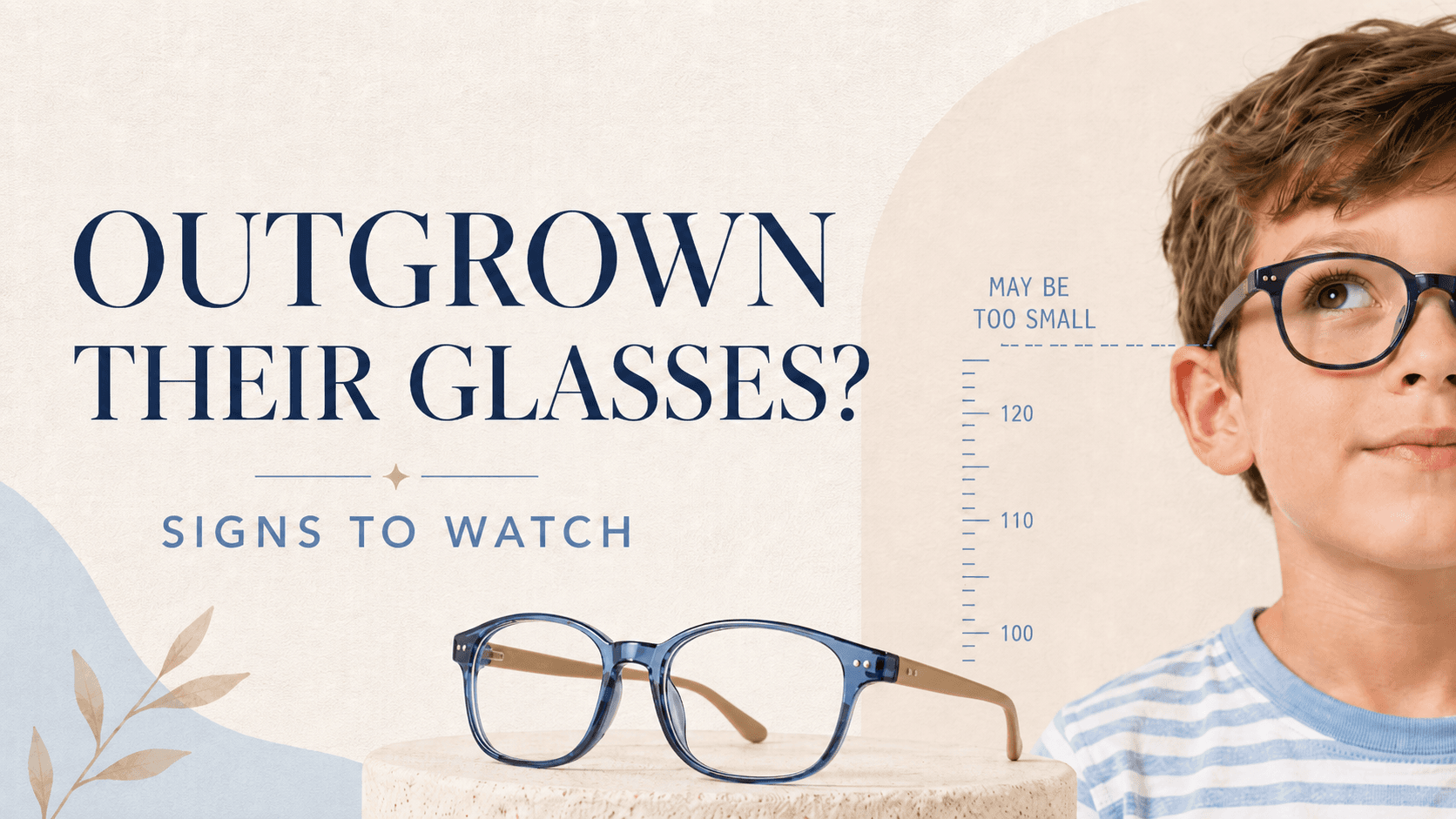
A child typically needs new glasses every 1–2 years, but many outgrow their frames or prescription even sooner. The two main signals are a frame that no longer fits the face properly and a prescription that no longer corrects vision well. Catching either sign early prevents eye strain, headaches, and setbacks in learning.
Why Children Outgrow Glasses Faster Than Adults
A child's face grows continuously through childhood and adolescence. The nose bridge widens, ears shift, and the distance between the eyes increases — all of which affect how frames sit and function. At the same time, a child's eyes are still developing, meaning their refractive error (nearsightedness, farsightedness, or astigmatism) can change significantly between annual check-ups.
Physical Signs the Frames No Longer Fit
Frames slide down the nose constantly — a sign the bridge is now too narrow relative to the child's nose
Temples press against the sides of the head — the frame width has become too small, causing discomfort or headaches
Lenses sit too close to or too far from the eyes — distorting vision and reducing optical effectiveness
Red marks or sore spots appear on the nose or behind the ears after normal wear
The child removes glasses frequently — often a comfort-driven response to a poor fit
Vision-Related Signs the Prescription Has Changed
A frame that still fits may still carry the wrong prescription. Watch for these behavioural cues:
Squinting at the board at school or at the TV at home
Complaining of headaches, especially after reading or screen time
Holding books or devices unusually close or far away
Rubbing eyes frequently or reporting blurred vision
A drop in academic performance linked to difficulty seeing
How Often Should a Child's Eyes Be Tested?
The general recommendation for children in India is an eye examination every 12 months. If your child has a progressive condition like myopia, your eye doctor may recommend check-ups every 6 months. Never wait for visible problems — many children cannot articulate that their vision has changed because they assume what they see is normal.
Frames vs. Prescription: What Needs Replacing?
Sometimes only the lenses need changing (new prescription, same frame). Other times the frame itself is too small or damaged and must be replaced entirely. A qualified optician can assess whether the existing frame is still serviceable. If the frame is bent, scratched across the optical zone, or structurally compromised, replacing both frame and lenses together is the safer and more cost-effective choice.
Tips for Extending the Life of Children's Glasses
Store glasses in a hard case every night
Clean lenses with a microfibre cloth — never a shirt or tissue
Get frames adjusted at an optical shop every 3–6 months, not just when something breaks
Choose frames labelled flexible or spring-hinge for active children — they survive everyday rough handling far better
When to Visit an Eye Doctor Immediately
Schedule an unplanned eye examination if your child suddenly reports double vision, complains that one eye feels different from the other, or if a teacher flags difficulty seeing the board. These symptoms can indicate more than just a prescription change and deserve prompt professional attention.
Keeping up with your child's changing vision needs is one of the most impactful things you can do for their development. When it is time for new frames, explore Rimloo's kids' eyeglasses collection for durable, well-fitting options suited to growing faces.
