
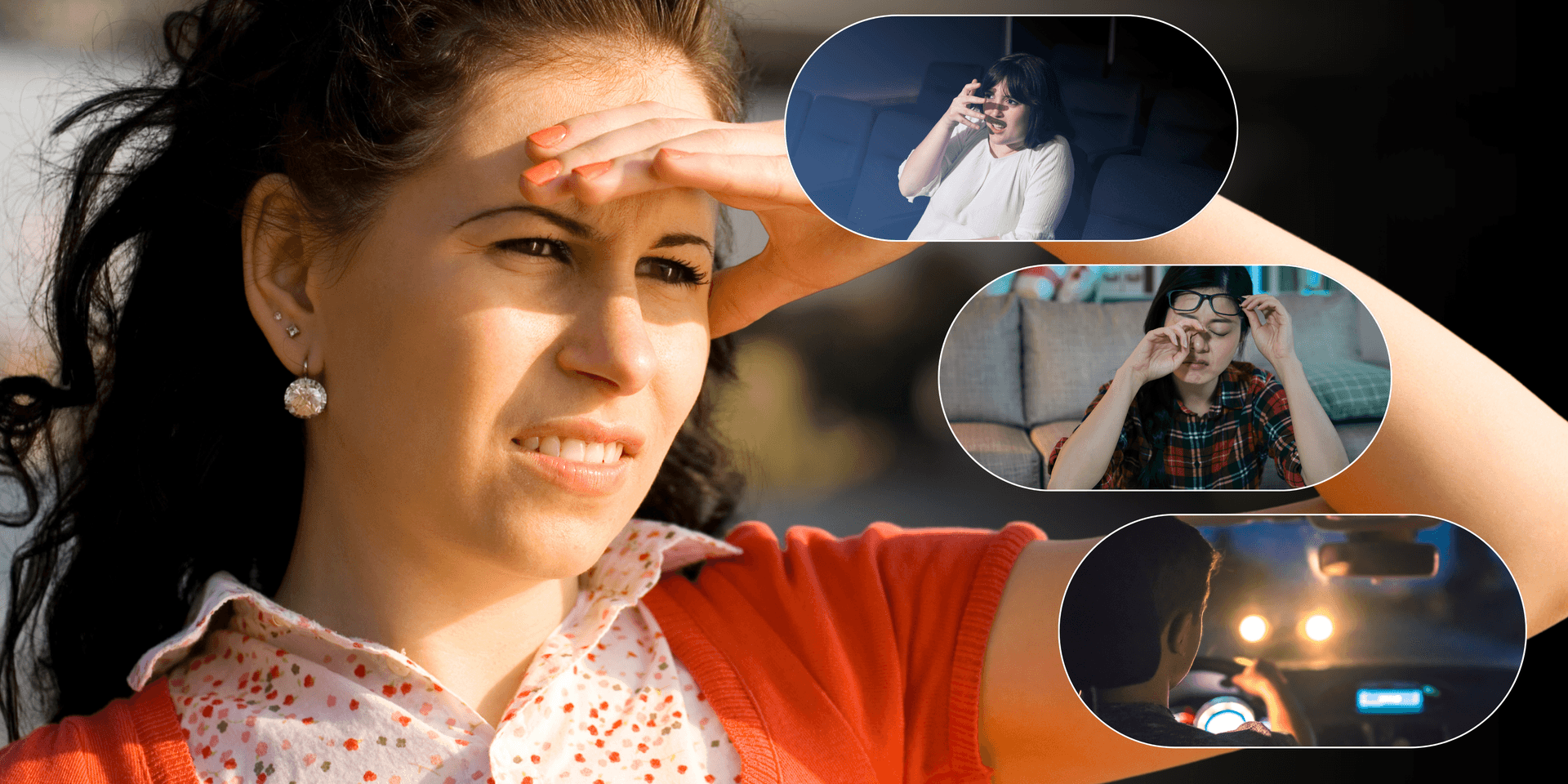
From morning to night, your eyes are constantly exposed to different types of light — and each one affects your vision in a different way.
But here’s something most people don’t realize:
Not all light is harmful… but not all light is safe either.
Some light helps you see clearly.
Some improves your mood.
But some can quietly strain your eyes, disturb your sleep, and even damage your vision over time.
In this guide, we’ll break everything down in a simple, easy-to-understand way — so you truly understand:
What different types of light exist
How each type affects your eyes
What symptoms to watch for
And most importantly — how to protect your vision
Understanding Light: The Basics (Made Simple)
Before we dive deeper, let’s understand one simple concept:
Light is made up of different wavelengths, and each wavelength affects your eyes differently.
Imagine light like a rainbow:
Red / Orange / Yellow → Low energy (generally safer)
Blue / Violet → High energy (can be harmful in excess)
The shorter the wavelength → the higher the energy → the deeper it can penetrate your eye.
That’s why some light types are more dangerous than others.
Types of Light That Affect Your Eyes
Let’s break down the major types of light you are exposed to daily:
1. Natural Sunlight (Visible + UV Light)
Sunlight is the most powerful natural light source. It includes:
Visible light (what we see)
Ultraviolet (UV) rays (invisible but harmful)
How It Affects Your Eyes:
Sunlight is essential — but too much exposure can cause damage.
Short-Term Effects:
Eye strain
Squinting
Headaches
Temporary vision discomfort
Long-Term Effects:
Increased risk of Cataracts
Risk of Macular Degeneration
Sunburn of the eye (yes, it happens!)
The Hidden Danger: UV Rays
UV rays don’t feel harmful immediately — but over time, they can damage your eye tissues permanently.
How to Protect Yourself:
Wear UV-protected sunglasses
Avoid direct sun exposure during peak hours (12–3 PM)
Use polarized lenses to reduce glare
2. Blue Light (Digital Screens & LED Lights)
What It Is:
Blue light is high-energy visible light emitted from:
Smartphones
Laptops
Tablets
LED lights
Why It Matters Today:
We are exposed to more blue light than ever before — thanks to screens.
How It Affects Your Eyes:
Immediate Effects:
Eye strain
Dry eyes
Blurred vision
Headaches
This condition is commonly known as Digital Eye Strain
Long-Term Concerns:
May contribute to retinal stress
Disrupts sleep by affecting melatonin (your sleep hormone)
The Sleep Problem:
Using screens at night tells your brain:
“Stay awake.”
This is why you feel tired but can’t sleep after scrolling.
How to Protect Yourself:
Use blue light filter glasses
Follow the 20-20-20 rule (every 20 min, look 20 feet away for 20 sec)
Reduce screen brightness at night
Enable “night mode” on devices
3. Artificial Indoor Lighting (LED & Fluorescent)
What It Is:
Artificial lighting includes:
LED bulbs
Tube lights
Office lighting
How It Affects Your Eyes:
Poor Lighting Can Cause:
Eye fatigue
Difficulty focusing
Headaches
Reduced productivity
The Real Problem:
It’s not just the light — it’s how it’s used.
Too bright → glare
Too dim → strain
Wrong angle → reflections
How to Fix It:
Use balanced lighting (not too bright, not too dim)
Position lights behind or beside you — not directly in your eyes
Avoid screen glare
4. Glare (Reflected Light)
What It Is:
Glare happens when light reflects off surfaces like:
Water
Roads
Glass
Snow
Why It’s Dangerous:
Glare reduces contrast and makes it harder to see clearly.
Effects on Your Eyes:
Temporary blindness (especially while driving)
Eye fatigue
Reduced visual clarity
Special Case: Night Driving
Headlight glare can be extremely uncomfortable and dangerous.
How to Protect Yourself:
Use polarized sunglasses
Wear anti-glare lenses
Keep windshields clean
5. Infrared Light (Heat-Based Light)
What It Is:
Infrared light is heat-based radiation, often found in:
Sunlight
Industrial environments
Heat sources
Effects on Eyes:
Can cause dryness
Heat stress to eye tissues
Long-term exposure may damage internal eye structures
Who Is at Risk?
Factory workers
Welders
People exposed to high heat environments
Protection Tips:
Use protective eyewear
Avoid prolonged exposure
6. Ultraviolet (UV) Light — The Invisible Threat:
UV light is invisible but highly damaging.
Types include:
UVA
UVB
Why It’s Dangerous:
You can’t see it — but it penetrates deep into your eyes.
Health Risks:
Photokeratitis
Cataracts
Long-term retinal damage
How to Protect:
Always wear UV400 sunglasses
Even on cloudy days (UV still exists!)
Signs Your Eyes Are Being Affected by Light
Your eyes give you warning signs. Don’t ignore them.
Common Symptoms:
Burning or dry eyes
Blurred vision
Sensitivity to light
Frequent headaches
Difficulty focusing
Watery eyes
If you experience these regularly, your eyes are under stress.
Simple Daily Habits to Protect Your Eyes
Let’s make this practical.
1. Follow the 20-20-20 Rule
Every 20 minutes → look at something 20 feet away → for 20 seconds.
2. Blink More Often
Sounds simple, but reduces dryness significantly.
3. Adjust Screen Settings
Lower brightness
Increase text size
Use dark mode
4. Use Proper Eyewear
Depending on your lifestyle:
Blue light glasses (for screens)
UV protection sunglasses (for outdoors)
Anti-glare lenses (for driving)
Why Modern Lifestyle Is Making Eye Problems Worse
Let’s be honest.
We are not living the same way humans did 20 years ago.
Today:
Screen time = 8–12 hours daily
Indoor lifestyle = Less natural balance
Night usage = Poor sleep cycles
This combination is creating a silent problem:
Constant eye stress.
And most people ignore it… until it becomes serious.
Conclusion: Your Eyes Deserve Better
Your eyes are one of the most powerful tools you have.
They help you:
Work
Connect
Experience life
But they are also delicate.
Different types of light — sunlight, screens, artificial lighting — are constantly influencing your eye health.
The goal is not to avoid light.
The goal is to manage your exposure smartly.
Because in the end:
Clear vision isn’t just about glasses.
It’s about how you protect your eyes every single day.
