
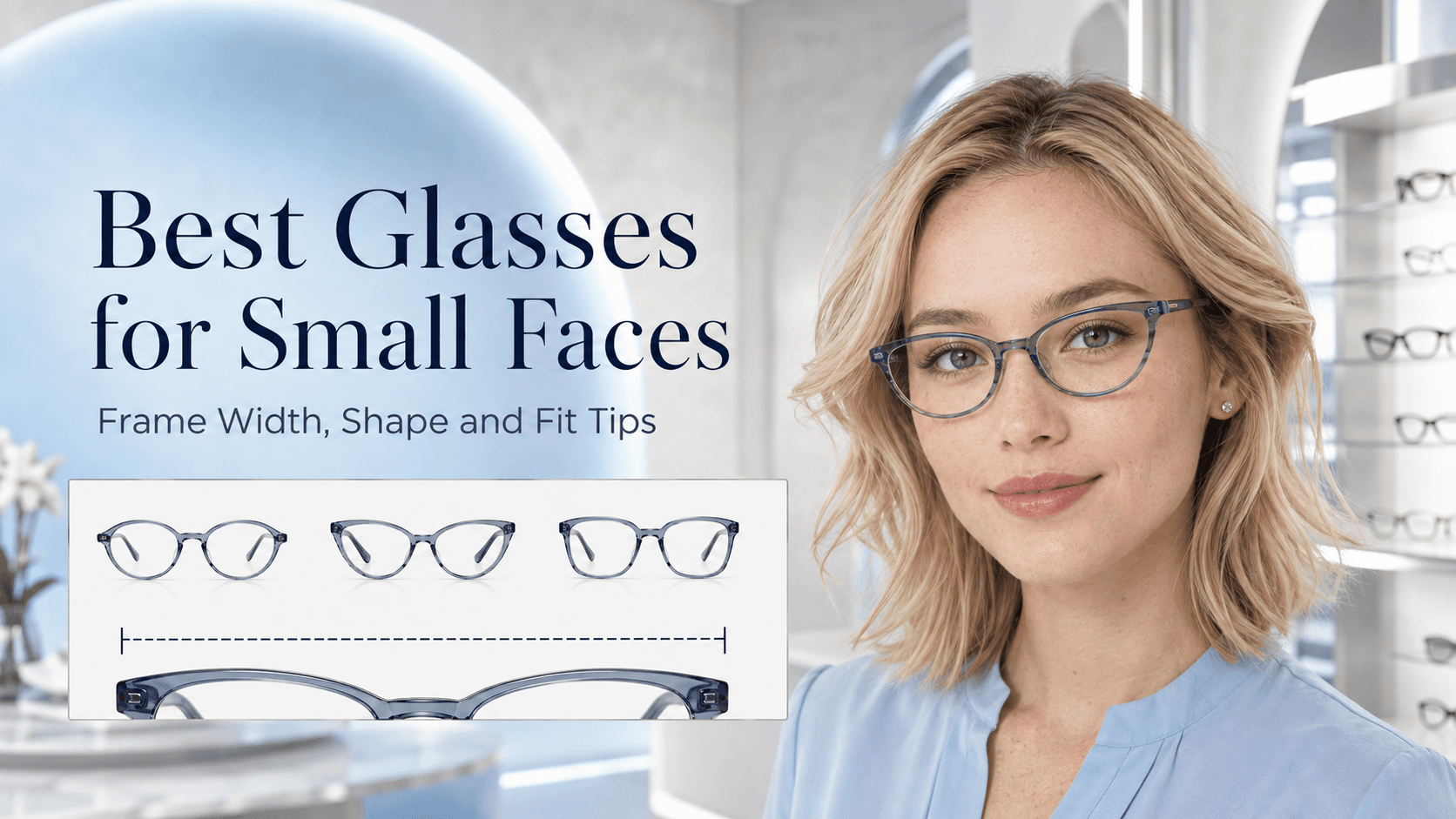
The best glasses for small faces are those with a total frame width between 120 mm and 130 mm, a lens width of 44–50 mm, and a short-to-medium temple length of 135–140 mm. Lightweight, narrow frames — such as round, oval, cat-eye, and geometric styles — sit proportionally on petite features without overpowering them. Getting these three measurements right is more important than any trend.
Why Frame Width Is the Most Important Measurement
Frame width is measured from the outermost edge of one temple hinge to the other. On a small face, the frame should align roughly with the width of your cheekbones — not extend beyond them. A frame that is even 10 mm too wide will slide down your nose and create an oversized, costume-like effect.
When shopping online, look for the measurements printed inside most frames, usually in a format like 48-20-140. The first number is the lens width, the second is the bridge width, and the third is the temple length. For small faces, aim for a lens width of 44–50 mm and a bridge width of 16–18 mm. A narrower bridge sits higher on your nose and prevents the frame from slipping.
Which Frame Shapes Work Best for Small Faces?
Proportion and balance are the guiding principles. The following shapes consistently work well:
Round frames: Soft curves echo the natural contours of a petite face and add a gentle, timeless quality. Keep the diameter under 48 mm.
Oval frames: A slightly elongated oval adds the illusion of length to a small, round face — a classic choice that works with almost every facial structure.
Cat-eye frames: The upswept outer corners draw the eye upward and outward, creating the impression of wider, more defined cheekbones without adding bulk.
Geometric frames (hexagon, square): Small geometric shapes add structure and a modern edge. Stick to frames with thin acetate or metal rims so they feel substantial but not heavy.
Browline frames: A thin browline in a small size draws attention to the upper face and eyes, which is especially flattering when the lower frame is minimal or rimless.
Frame Shapes to Approach With Caution
Some styles can work on a small face but require careful sizing:
Oversized frames: Currently fashionable, but even one size too large can slide off a narrow nose bridge. If you love this trend, choose a style labelled "medium" rather than "large" and look for an adjustable nose pad.
Wide rectangular frames: A very wide rectangle can make a small face look narrow and overwhelmed. If you prefer rectangles, choose a horizontal width close to your cheekbone width.
Aviators: The double-bridge and large teardrop lens can overpower a small face. Opt for a mini-aviator variant (lens width 48 mm or under) to keep the look balanced.
Fit Tips Beyond Frame Width
Check the Nose Bridge
A frame with adjustable silicone nose pads gives you far more flexibility than a fixed acetate bridge. Nose pads can be bent inward to narrow the fit, raising the frame and keeping it in place on a flatter or narrower nose bridge — a common feature among many Indian wearers.
Mind the Temple Length
Temples (the arms that rest over your ears) that are too long sit loosely, causing the frame to tilt forward. A 135 mm temple is usually ideal for a small face; 140 mm works if there is a downward curve at the tip that hooks snugly behind the ear.
Lens Height and Your Field of Vision
For prescription wearers — especially those with progressive lenses — lens height (the vertical measurement of the lens) matters enormously. A lens height below 28 mm may not accommodate a full progressive corridor. If you need progressives and have a small face, discuss minimum lens height requirements with your optician before choosing a frame.
Material and Weight: Why It Matters on a Small Frame
On smaller frames, the visual and physical weight of the material is magnified. Titanium and beta-titanium frames are ultra-light and hypoallergenic — an excellent choice if you wear glasses all day. Thin acetate frames offer colour variety without being heavy. Avoid thick plastic frames in small sizes; they can look disproportionately chunky on a petite face.
Sunglasses for Small Faces: Key Considerations
The same width and bridge rules apply to sunglasses. Look for UV400 or polarised lenses in a frame sized for smaller faces. Wraparound sports styles are rarely ideal — the curve often extends past the temples on a narrow face, reducing peripheral coverage rather than improving it. Cat-eye and round sunglasses in a small size tend to offer the best combination of coverage and proportion. If you need prescription sunglasses, confirm the lens height is adequate for your prescription type before ordering.
How to Measure Your Face at Home
You do not need professional equipment. Use a flexible tape measure or a ruler held against a mirror:
Measure your face width at the widest point (usually across the cheekbones, temple to temple).
A reading of 125 mm or less typically indicates a small face; 125–135 mm is small-to-medium.
Use this number as your upper limit for total frame width when filtering products online.
Cross-reference with the pupillary distance (PD) measurement from your prescription — a PD under 60 mm usually confirms a narrower face.
