
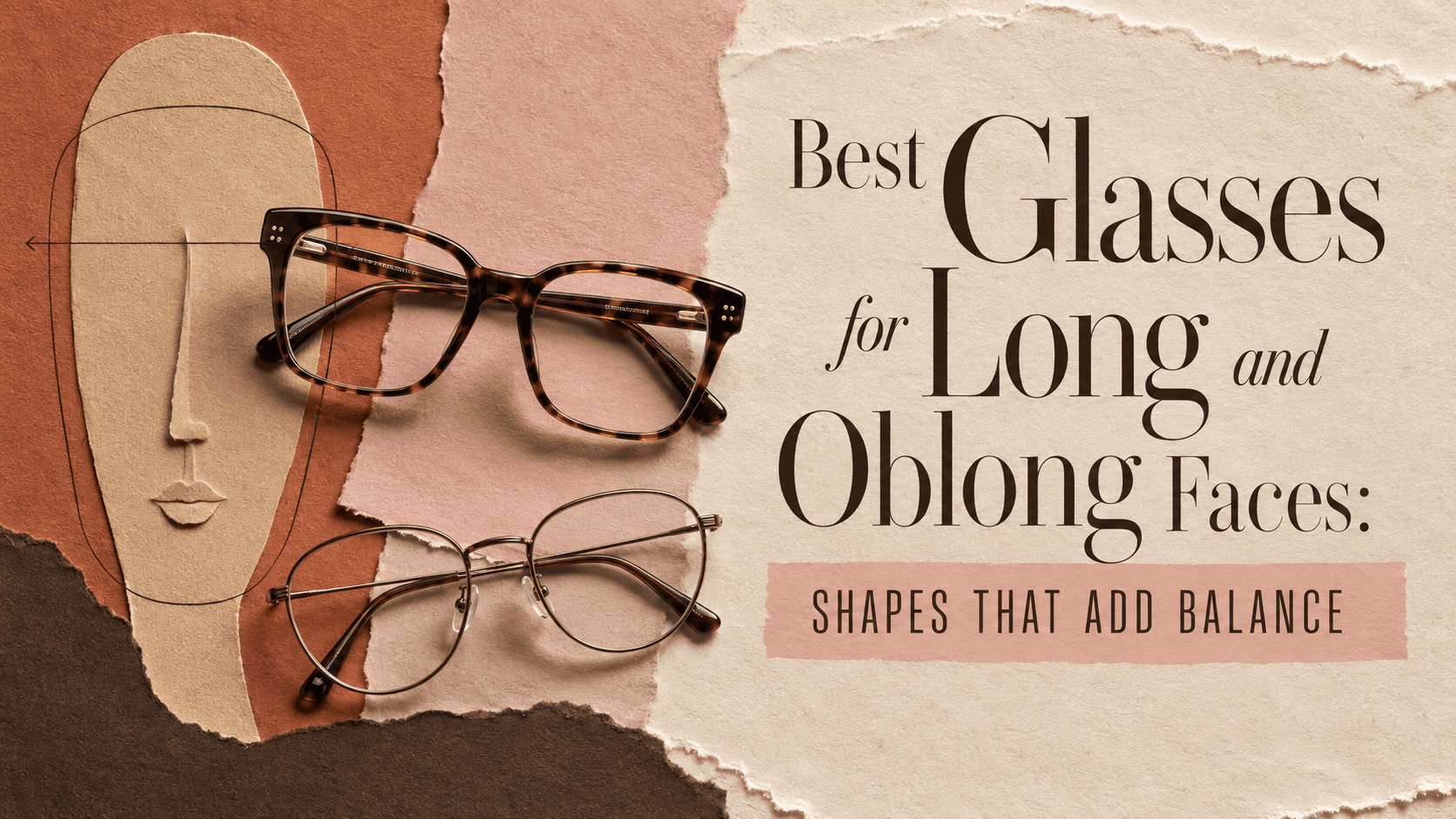
Best Glasses for Long and Oblong Faces: Shapes That Add Balance
The best glasses for long and oblong faces typically have deep lenses, noticeable width and strong horizontal details. Oversized, square, round, aviator, cat-eye and browline frames can make a longer face appear more balanced without hiding its natural features.
However, face-shape advice is a starting point—not a strict rule. Frame measurements, bridge fit, comfort and personal style matter just as much as shape.
Do You Have a Long or Oblong Face?
An oblong face is usually longer than it is wide. The forehead, cheekbones and jawline may be similar in width, with relatively straight sides and a softly rounded chin.
Common characteristics include:
Face length greater than face width
A tall forehead or elongated chin
Straight or gently curved facial sides
Balanced cheekbones
A softly rounded or slightly narrow jaw
Oblong and oval faces can appear similar, but an oblong face is generally longer and less curved through the cheeks.
Best Glasses Shapes for Long and Oblong Faces
1. Oversized Glasses
Oversized glasses are among the most flattering frames for an oblong face. Their deeper lenses occupy more vertical space, helping the face appear shorter and better proportioned.
Choose a frame that is bold but not excessively wide. The temples should sit comfortably without extending far beyond the sides of your face.
2. Square Frames
Square glasses create strong horizontal lines that contrast with the length of the face. Frames with medium-to-deep lenses and slightly rounded corners provide structure without looking too harsh.
Wide square frames are particularly effective for people who want a confident, modern appearance.
3. Round and Oval Glasses
Round glasses soften the straight sides of a long face and bring attention towards its centre. Medium or oversized round frames usually create more balance than small circular glasses.
Slightly wider oval frames are another versatile choice, especially if you prefer a softer and more understated style.
4. Aviator Frames
Aviators work well on oblong faces because their deep, teardrop-shaped lenses fill more facial space. A prominent brow bar or double bridge also adds horizontal emphasis.
For prescription glasses, consider geometric aviators or acetate aviator frames for a contemporary alternative to traditional metal styles.
5. Cat-Eye Glasses
Cat-eye glasses direct attention outward and upward, making the face appear wider and subtly lifted. Look for designs with adequate lens depth rather than extremely narrow cat-eye frames.
A soft upsweep creates an elegant everyday look, while oversized cat-eye glasses offer a bolder fashion statement.
6. Browline and Geometric Frames
Browline glasses feature a stronger upper rim that visually divides the length of the face and highlights the eyes. Hexagonal, octagonal and other geometric frames can add width and definition through their distinctive angles.
Choose medium or large geometric glasses with deep lenses for the most balanced effect.
Frame Features That Add Balance
Shape is important, but specific frame details can also influence your overall look:
Deep lenses: Cover more vertical space and reduce the appearance of facial length.
Bold temples: Draw attention towards the sides of the face.
Brow bars: Introduce a strong horizontal focal point.
Decorative details: Colour accents and patterned temples create visual width.
Low-positioned bridges: May visually shorten the nose, provided the bridge fits securely.
Glasses to Approach Carefully
You can wear any style that makes you feel confident, but certain frames may emphasise the length of an oblong face:
Very narrow rectangular glasses
Tiny round frames
Shallow lenses
Frames noticeably narrower than the face
Minimal rimless glasses with little shape definition
If you prefer minimalist eyewear, choose a wider rimless or thin-metal frame with deep lenses, a double bridge or distinctive temple details.
How Should Glasses Fit a Long Face?
Even the most flattering shape will not look or feel right if the size is incorrect. Check these areas before purchasing:
Frame width: It should generally align with the widest part of your face.
Bridge: It should remain secure without pinching or slipping.
Eye position: Your pupils should sit close to the horizontal centre of the lenses.
Temples: The arms should not press against your head or flare outward.
Eyebrows: The upper rim should complement—not awkwardly cover—your natural brow line.
An optical professional can help adjust the bridge, temples and frame alignment when necessary.
Frequently Asked Questions
Are rectangular glasses good for a long face?
Yes, provided they have sufficient width and lens depth. Very shallow rectangular glasses may make the face appear longer.
Do oversized glasses suit oblong faces?
Oversized glasses often suit oblong faces because their deeper lenses balance facial length. Select the correct width to prevent slipping or an overwhelming appearance.
Which sunglasses suit a long face?
Oversized sunglasses, wide wayfarers, aviators, cat-eye frames and large round sunglasses are all strong options for long faces.
Find Frames That Feel Like You
The best glasses for long and oblong faces add width, depth or horizontal emphasis. Oversized, square, round, aviator, cat-eye, browline and geometric frames are all worth exploring.
Use face shape to narrow your options, then prioritise accurate measurements, bridge comfort and your personal style. Explore Rimloo’s eyeglasses and sunglasses to find a frame that brings balance to your features while still feeling unmistakably yours.
The best glasses for long and oblong faces typically have deep lenses, noticeable width and strong horizontal details. Oversized, square, round, aviator, cat-eye and browline frames can make a longer face appear more balanced without hiding its natural features.
However, face-shape advice is a starting point—not a strict rule. Frame measurements, bridge fit, comfort and personal style matter just as much as shape.
Do You Have a Long or Oblong Face?
An oblong face is usually longer than it is wide. The forehead, cheekbones and jawline may be similar in width, with relatively straight sides and a softly rounded chin.
Common characteristics include:
Face length greater than face width
A tall forehead or elongated chin
Straight or gently curved facial sides
Balanced cheekbones
A softly rounded or slightly narrow jaw
Oblong and oval faces can appear similar, but an oblong face is generally longer and less curved through the cheeks.
Best Glasses Shapes for Long and Oblong Faces
1. Oversized Glasses
Oversized glasses are among the most flattering frames for an oblong face. Their deeper lenses occupy more vertical space, helping the face appear shorter and better proportioned.
Choose a frame that is bold but not excessively wide. The temples should sit comfortably without extending far beyond the sides of your face.
2. Square Frames
Square glasses create strong horizontal lines that contrast with the length of the face. Frames with medium-to-deep lenses and slightly rounded corners provide structure without looking too harsh.
Wide square frames are particularly effective for people who want a confident, modern appearance.
3. Round and Oval Glasses
Round glasses soften the straight sides of a long face and bring attention towards its centre. Medium or oversized round frames usually create more balance than small circular glasses.
Slightly wider oval frames are another versatile choice, especially if you prefer a softer and more understated style.
4. Aviator Frames
Aviators work well on oblong faces because their deep, teardrop-shaped lenses fill more facial space. A prominent brow bar or double bridge also adds horizontal emphasis.
For prescription glasses, consider geometric aviators or acetate aviator frames for a contemporary alternative to traditional metal styles.
5. Cat-Eye Glasses
Cat-eye glasses direct attention outward and upward, making the face appear wider and subtly lifted. Look for designs with adequate lens depth rather than extremely narrow cat-eye frames.
A soft upsweep creates an elegant everyday look, while oversized cat-eye glasses offer a bolder fashion statement.
6. Browline and Geometric Frames
Browline glasses feature a stronger upper rim that visually divides the length of the face and highlights the eyes. Hexagonal, octagonal and other geometric frames can add width and definition through their distinctive angles.
Choose medium or large geometric glasses with deep lenses for the most balanced effect.
Frame Features That Add Balance
Shape is important, but specific frame details can also influence your overall look:
Deep lenses: Cover more vertical space and reduce the appearance of facial length.
Bold temples: Draw attention towards the sides of the face.
Brow bars: Introduce a strong horizontal focal point.
Decorative details: Colour accents and patterned temples create visual width.
Low-positioned bridges: May visually shorten the nose, provided the bridge fits securely.
Glasses to Approach Carefully
You can wear any style that makes you feel confident, but certain frames may emphasise the length of an oblong face:
Very narrow rectangular glasses
Tiny round frames
Shallow lenses
Frames noticeably narrower than the face
Minimal rimless glasses with little shape definition
If you prefer minimalist eyewear, choose a wider rimless or thin-metal frame with deep lenses, a double bridge or distinctive temple details.
How Should Glasses Fit a Long Face?
Even the most flattering shape will not look or feel right if the size is incorrect. Check these areas before purchasing:
Frame width: It should generally align with the widest part of your face.
Bridge: It should remain secure without pinching or slipping.
Eye position: Your pupils should sit close to the horizontal centre of the lenses.
Temples: The arms should not press against your head or flare outward.
Eyebrows: The upper rim should complement—not awkwardly cover—your natural brow line.
Find Frames That Feel Like You
The best glasses for long and oblong faces add width, depth or horizontal emphasis. Oversized, square, round, aviator, cat-eye, browline and geometric frames are all worth exploring.
Use face shape to narrow your options, then prioritise accurate measurements, bridge comfort and your personal style. Explore Rimloo’s eyeglasses and sunglasses to find a frame that brings balance to your features while still feeling unmistakably yours.
