
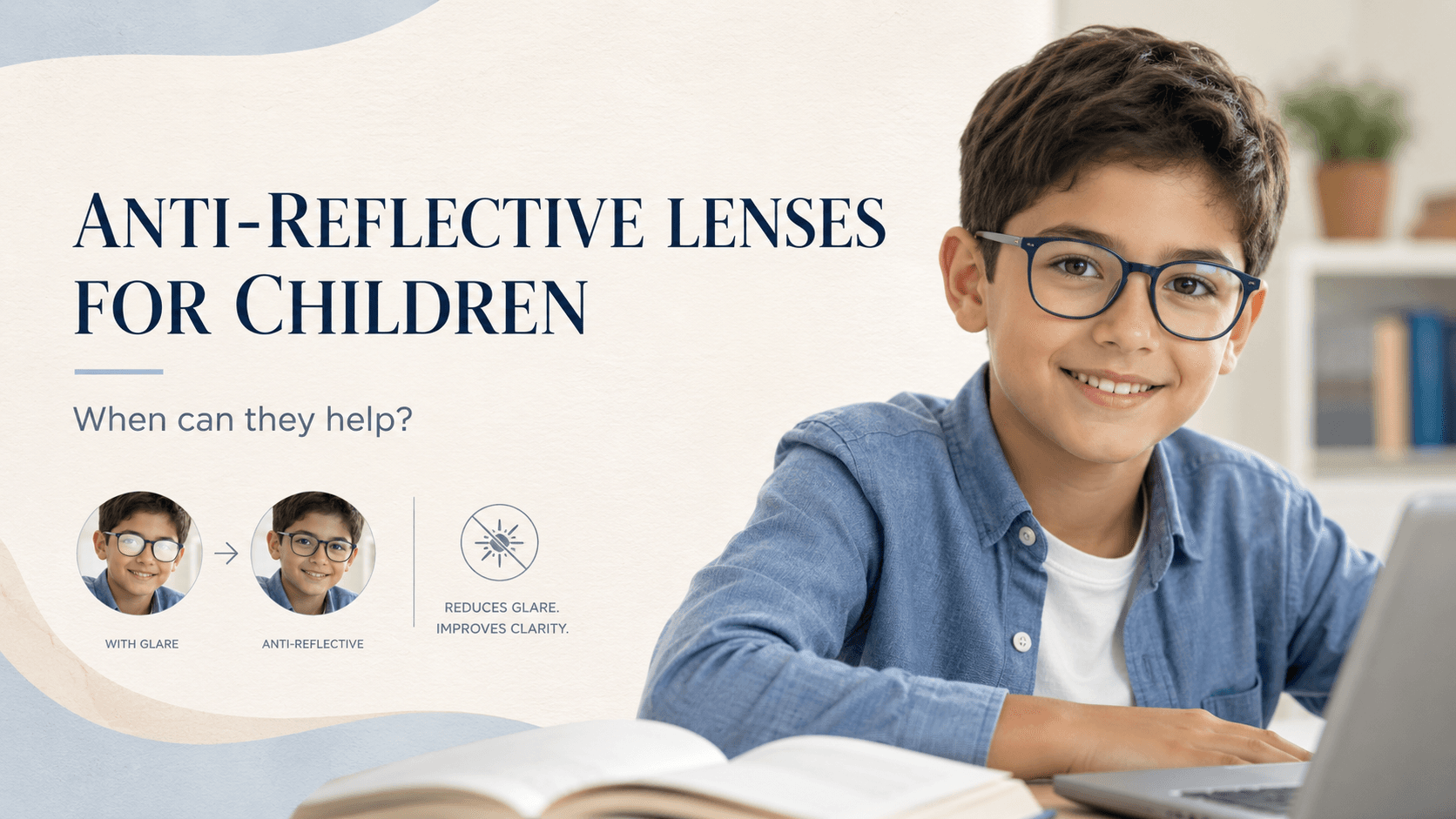
Anti-reflective (AR) coatings reduce glare from screens, artificial lighting, and oncoming headlights by allowing up to 99% of light to pass through the lens rather than bounce off it. For children who wear prescription glasses, this translates to less eye strain, clearer vision in classrooms and outdoors, and—in many cases—better compliance with actually wearing their glasses.
What Does an Anti-Reflective Coating Actually Do?
A standard lens reflects roughly 8% of incoming light. An AR coating cuts that figure to under 1% by applying multiple micro-thin layers to the lens surface. The result is a lens that looks nearly invisible, makes eye contact easier for teachers and parents to read, and reduces the halo effect children often notice around lights at night or in brightly lit classrooms.
When Are AR Lenses Most Beneficial for Children?
High Screen Exposure
Children who spend two or more hours a day on tablets, laptops, or smartphones are prime candidates. Screens emit a high proportion of high-energy visible (blue) light, and the reflective glare off a standard lens surface compounds digital eye strain. An AR coating—especially one with a blue-light filtering layer—can reduce squinting and headaches noticeably.
Moderate to High Prescriptions
Thicker lenses in higher prescriptions reflect more light than thinner ones. Children with prescriptions above ±3.00 dioptres will see a more dramatic improvement in visual clarity and lens aesthetics with an AR coating applied.
Classroom and Reading Environments
Fluorescent and LED lighting in Indian schools creates significant overhead glare. An AR lens helps children focus on the board or their textbooks without constantly tilting their head to find a less-glary angle—a habit that quietly contributes to posture problems and fatigue.
Children Being Treated for Amblyopia or Strabismus
When a child is under active treatment for a lazy eye or squint, crisp, undistorted vision in the prescription lens is critical. AR coatings support that by eliminating competing reflections that could interfere with the brain's processing of the corrected image.
Are There Situations Where AR Coatings Are Less Critical?
For very young children under four who are not yet in school and have minimal screen time, a basic prescription lens is usually sufficient to start. AR coatings add value, but the priority at that age is simply getting the right prescription on the face and keeping it there. Similarly, if a child is extremely rough with glasses and replacements are frequent, discuss scratch-resistance options first with your optometrist before adding coating layers.
AR Coatings vs. Blue-Light Blocking Lenses: Which Does a Child Need?
These two features are not mutually exclusive. Many modern children's lenses combine an AR coating with a blue-light filter in a single treatment. If your child's primary concern is screen use, a blue-light AR lens addresses both glare and high-energy light simultaneously. If screen time is minimal but classroom glare is the issue, a standard AR coating is sufficient and typically more affordable.
Tips for Keeping AR Lenses Clean and Scratch-Free
AR lenses require a little more care than uncoated lenses because the coating itself can show smudges more visibly. Teach children to rinse lenses under lukewarm water before wiping, use only the microfibre cloth provided, and never place glasses lens-down on a surface. Pairing AR lenses with a hard case and regular cleaning habits significantly extends the coating's life.
